Early Skin Cancer Screening: Mole Mapping in Dubai
Skin cancer does not always announce itself with an obvious warning sign. In many cases, it begins quietly, as a mole that looks slightly darker, a spot with a new uneven border, or a mark that seems unchanged until you compare it with an older photo. Because these early changes can be subtle and easy to overlook, many people do not realise something needs attention until much later.
Mole mapping allows suspicious moles and pigmented lesions to be documented and compared over time, making it easier to detect small changes that the eye may miss. In this blog, we will explore how mole mapping supports early skin cancer screening, who may benefit from it, and why it can be such a valuable step in identifying concerning skin changes sooner rather than later.
Why Early Skin Cancer Detection Matters So Much
Skin cancer is one of the most common cancers worldwide, but it is also one of the most treatable when identified early.
That is the key point.
The problem is not always the presence of a suspicious lesion. The problem is often delayed.
Patients may delay because:
The mole does not hurt
It has “always been there”
They assume it is harmless
They do not know what to look for
They are not sure if the spot is actually changing
They wait until the lesion becomes visibly obvious
This is why early skin cancer detection is so important. A lesion that is caught in its earliest stage is usually much easier to evaluate and manage than one that has been ignored for months or years.
The difficulty is that many skin changes are subtle, and memory is unreliable. Most people cannot accurately remember how every mole looked six months ago, especially if they have many moles or lesions across the body.
That is where structured monitoring becomes incredibly valuable.
What Is Mole Mapping?
Mole mapping is a dermatology-based monitoring method used to document, compare, and track moles and pigmented skin lesions over time.
In simple terms, it creates a visual record of your skin so that changes can be identified more accurately.
Rather than relying only on memory or occasional mirror checks, mole mapping helps the dermatologist assess:
Which moles are stable
Which lesions are new
Which spots have changed in size, shape, or colour
Which lesions need closer follow-up
Which areas may require dermatoscopic evaluation or biopsy
This is especially useful for patients who have:
Many moles
Atypical moles
A personal or family history of skin cancer
Fair skin with heavy sun exposure
Previous sunburns
Lesions in hard-to-see areas like the back or scalp
It is not a treatment.
It is a monitoring and diagnostic support tool, and that is exactly what makes it so valuable.
Why Mole Mapping Is More Useful Than “Just Keeping an Eye on It”
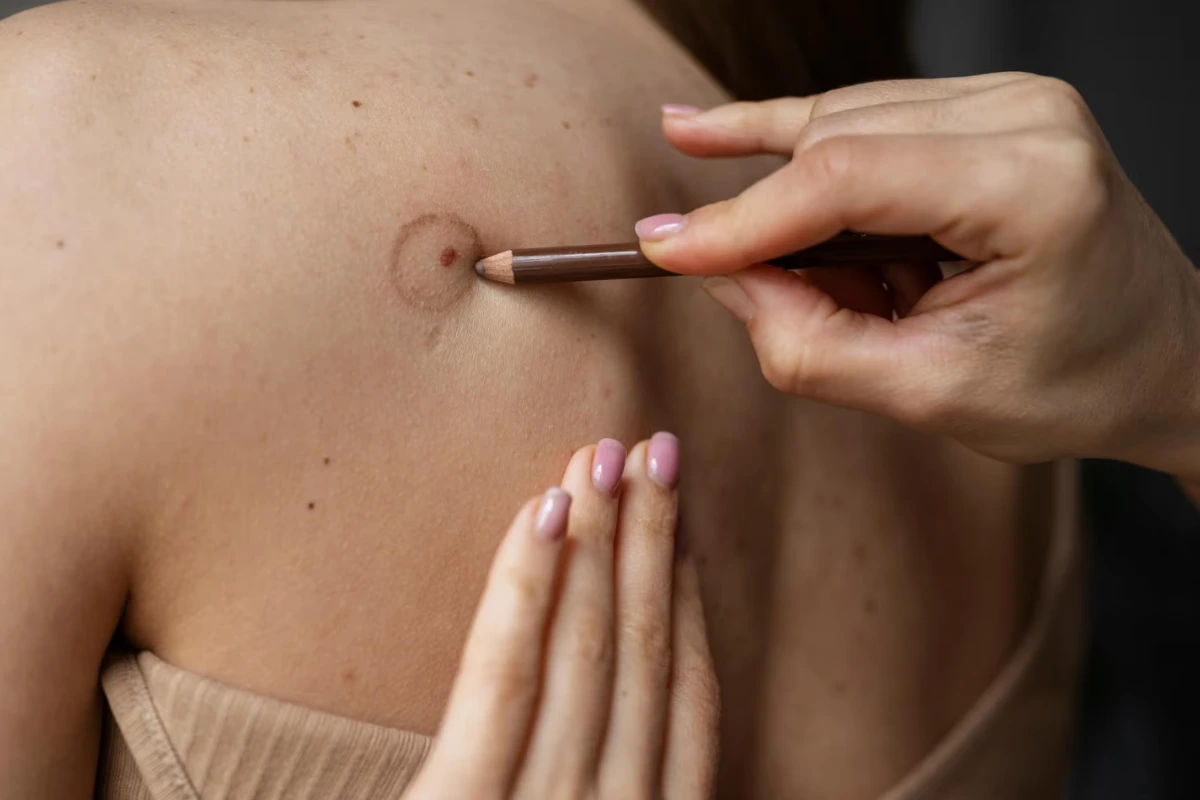
Many patients say, “I will watch it and see if it changes.”
The problem is that most people do not have a reliable baseline.
Without proper documentation, it is very difficult to know:
If a mole has actually enlarged
If the border has become more irregular
If the pigmentation pattern has shifted
If a new lesion has appeared nearby
If multiple moles are evolving in different ways
Even if you are observant, human memory is not precise enough for subtle pigment monitoring.
This is why a skin cancer mole check done in a clinical setting is far more useful than casual self-observation alone.
A professional assessment allows suspicious lesions to be evaluated in context, not in isolation.
How Mole Mapping Supports Early Diagnosis
The biggest strength of mole mapping is that it helps catch change.
And in dermatology, change matters.
A lesion that has been stable for years is usually approached differently than one that has recently become:
Darker or showing signs of unusual pigmentation
Larger
More asymmetric
More irregular at the border
Multicoloured
Raised in a new way
Crusty, irritated, or bleeding
Mole mapping helps by creating a structured visual timeline.
That means if a mole is photographed and documented today, it can be compared with future visits to identify whether it is:
Completely stable
Slowly evolving
Clearly suspicious
New and worth monitoring
A candidate for closer examination
This kind of structured comparison improves diagnostic confidence and reduces the chance of missing subtle but meaningful changes.
What Happens During a Mole Mapping Appointment?
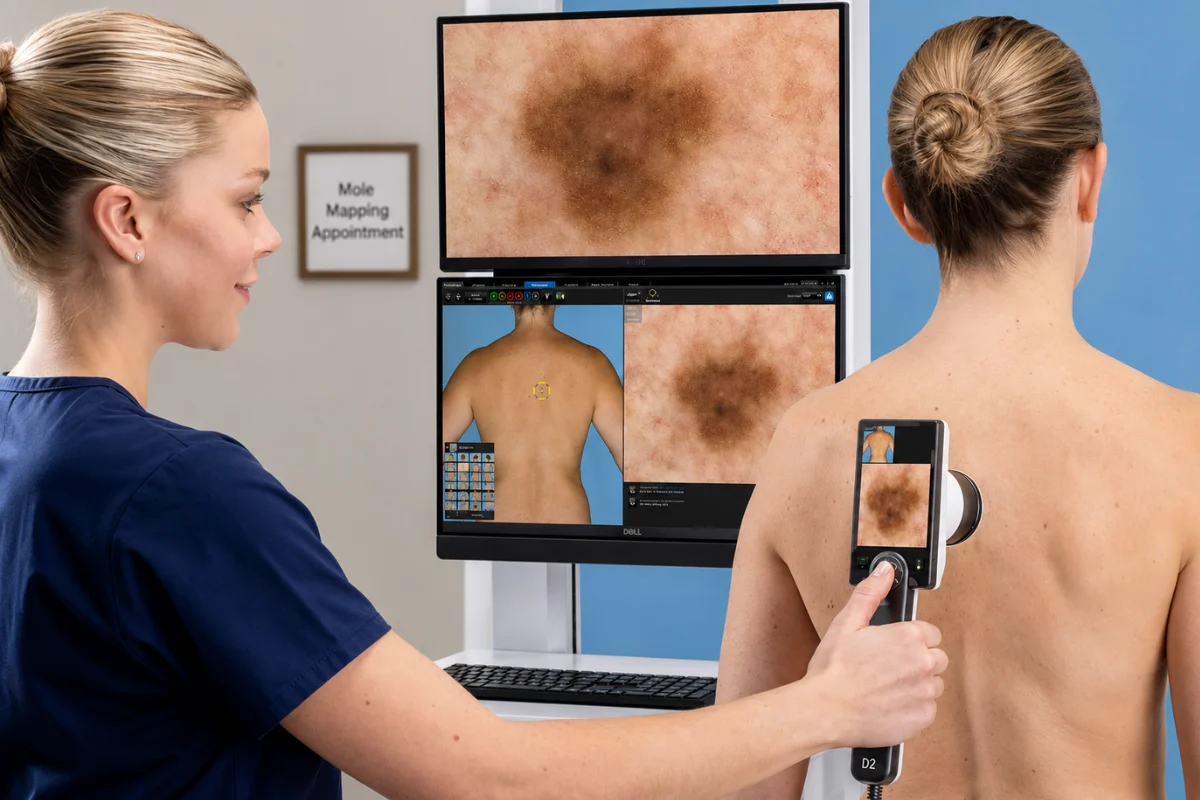
Many patients imagine it is a complicated or painful process. It is not.
A mole mapping visit is usually non-invasive and focused on careful visual assessment.
A typical appointment may include:
1. Medical History Review
The dermatologist may ask about:
Personal history of suspicious moles or skin cancer
Family history of melanoma or other skin cancers
Sun exposure habits
Tanning history
Frequent sunburns
Changes you have personally noticed
Any itching, bleeding, or rapidly changing lesions
2. Full Skin Examination
A head-to-toe skin check may be performed to assess:
Existing moles
New lesions
Pigmented spots
Irregular patches
Hard-to-see areas such as the back, scalp, behind the ears, and soles
3. Dermatoscopic Evaluation
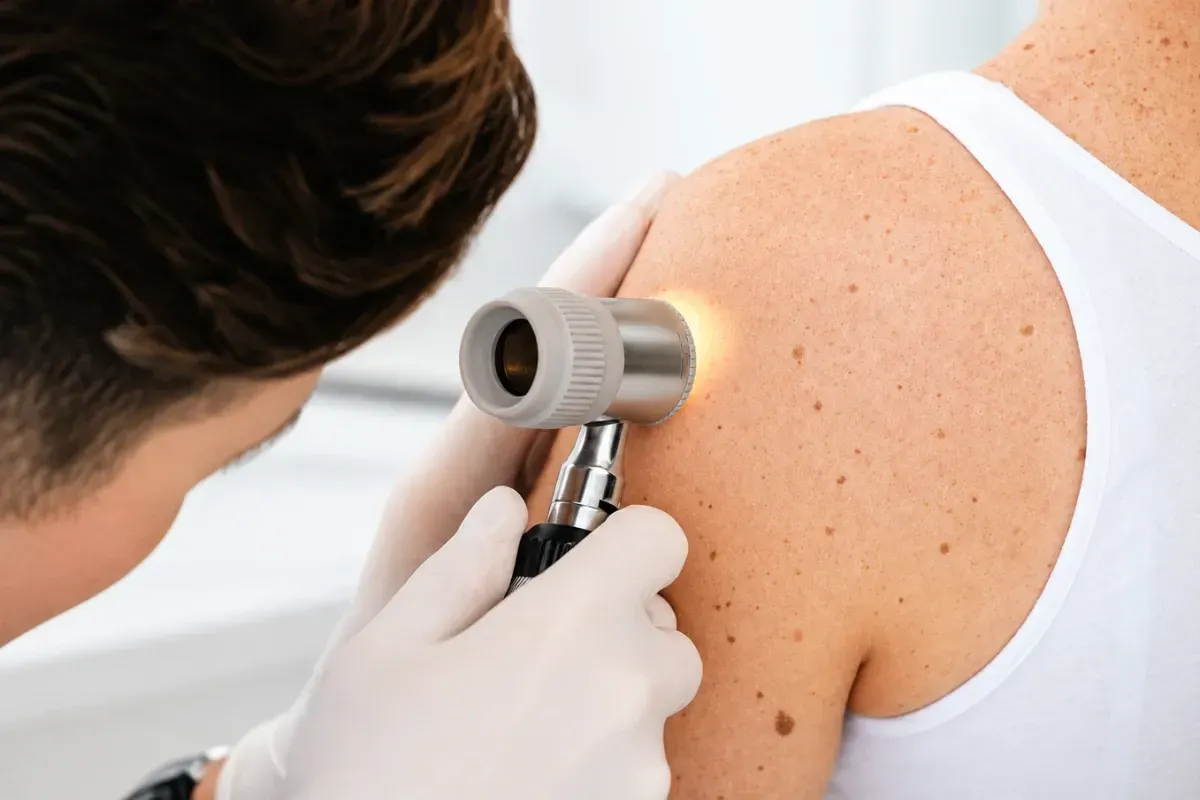
A dermatoscope may be used to examine lesions more closely. This helps the dermatologist see structures and pigment patterns not visible to the naked eye.
4. Clinical Documentation
Photographic or digital documentation may be used to record moles and lesion distribution for future comparison.
This is where digital mole mapping screening becomes especially useful as part of a full skin consultation. Digital tools can help create a more accurate long-term reference, making follow-up assessments more precise and clinically meaningful.
5. Follow-Up Planning
Based on the findings, the doctor may recommend:
Routine annual monitoring
Shorter interval follow-up for specific lesions
Closer dermatoscopic review
Biopsy or removal of a suspicious lesion if needed
Who Should Consider Mole Mapping?
Not every patient needs the same level of monitoring, but some people benefit significantly more from structured mole tracking.
Mole mapping is especially helpful if you have:
Many moles across the body
Unusual or atypical-looking moles
Fair skin that burns easily
A history of intense sun exposure
Frequent sunburns, especially in childhood
A personal history of suspicious lesions
A family history of melanoma
Moles that are difficult to monitor on your own
New lesions appearing more frequently with age
Anxiety about whether certain moles are changing
It is also useful for patients who simply want a professional baseline. Even if nothing is suspicious right now, having a proper record makes future comparisons far more reliable.
What Should You Watch for at Home Between Appointments?
Mole mapping is valuable, but it does not replace self-awareness.
You should still keep an eye on your skin between visits.
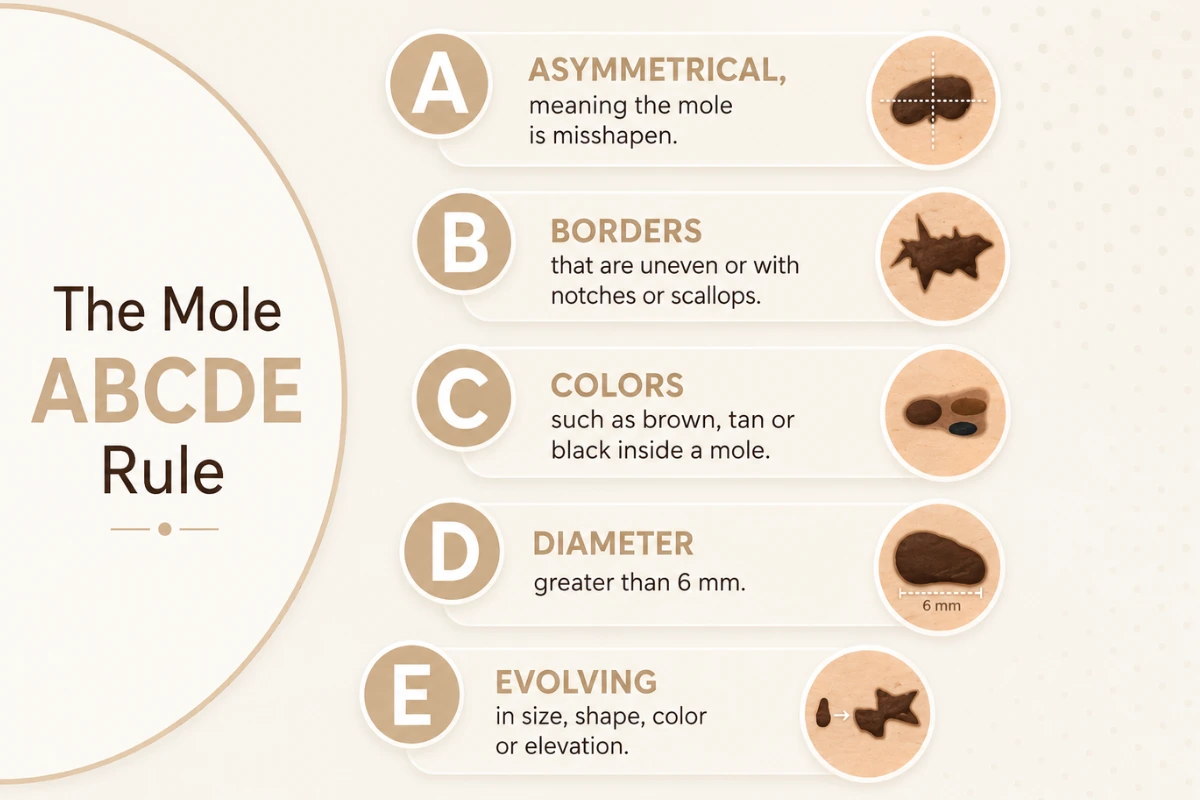
A helpful guide is the ABCDE rule for suspicious moles:
A – Asymmetry
One half does not match the other.
B – Border
The edges look irregular, blurred, jagged, or poorly defined.
C – Colour
There are multiple shades within the same lesion, such as brown, black, red, grey, or white.
D – Diameter
The lesion is growing, especially if larger than 6 mm, though smaller lesions can still be important.
E – Evolving
This is often the most important sign. The mole is changing in size, shape, colour, texture, or symptoms.
You should also pay attention to lesions that:
Itch persistently
Bleed without obvious trauma
Crust repeatedly
Become raised suddenly
Look very different from your other moles
Heal and then reappear
If a lesion feels “different,” that is reason enough to get it checked.
Does Mole Mapping Diagnose Skin Cancer by Itself?
This is an important distinction.
Mole mapping does not diagnose skin cancer on its own.
It is a monitoring and assessment tool.
Its role is to:
Improve surveillance
Track changes more accurately
Support clinical decision-making
Help identify which lesions need closer evaluation
If a lesion appears suspicious, the dermatologist may still recommend:
Dermatoscopic review
Short-term follow-up
Biopsy
Removal and laboratory testing
So think of mole mapping as a highly valuable early-warning system, not a replacement for medical diagnosis.
Why Patients Often Delay Screening
Even when people notice a changing mole, many still wait.
Common reasons include:
“It is probably nothing.”
“It does not hurt.”
“I have had it for years.”
“I am too busy.”
“I do not know if it has actually changed.”
“I will wait and see.”
The truth is, waiting often creates more uncertainty, not less.
The best time to evaluate a suspicious lesion is before it becomes obvious, irritated, or advanced. That is the entire advantage of structured monitoring and routine skin checks.
The Value of Baseline Documentation
One of the smartest reasons to do mole mapping even when nothing looks alarming is this:
It gives you a baseline.
A baseline means:
You know what “normal for you” looks like
Your dermatologist can compare future changes properly
New lesions are easier to identify
Subtle changes are less likely to be missed
Follow-up becomes more targeted and efficient
This is particularly useful for patients with multiple moles or a strong sun-damage history, where visual clutter can make tracking changes much harder.
Final Thoughts
Most people don’t ignore skin changes because they don’t care; they ignore them because the spot looks small, life gets busy, and it doesn’t feel urgent. That’s exactly why mole mapping is so important. It brings structure and accuracy to what’s easy to overlook, helping track changes over time.
The goal is not to create fear, but to clearly know which moles are stable, which are changing, and which need attention.
If you have multiple moles, a changing lesion, or simply want peace of mind, don’t wait. Book an expert skin evaluation with Dr Mayur Bhobe in Dubai at +971 507 256 753.

