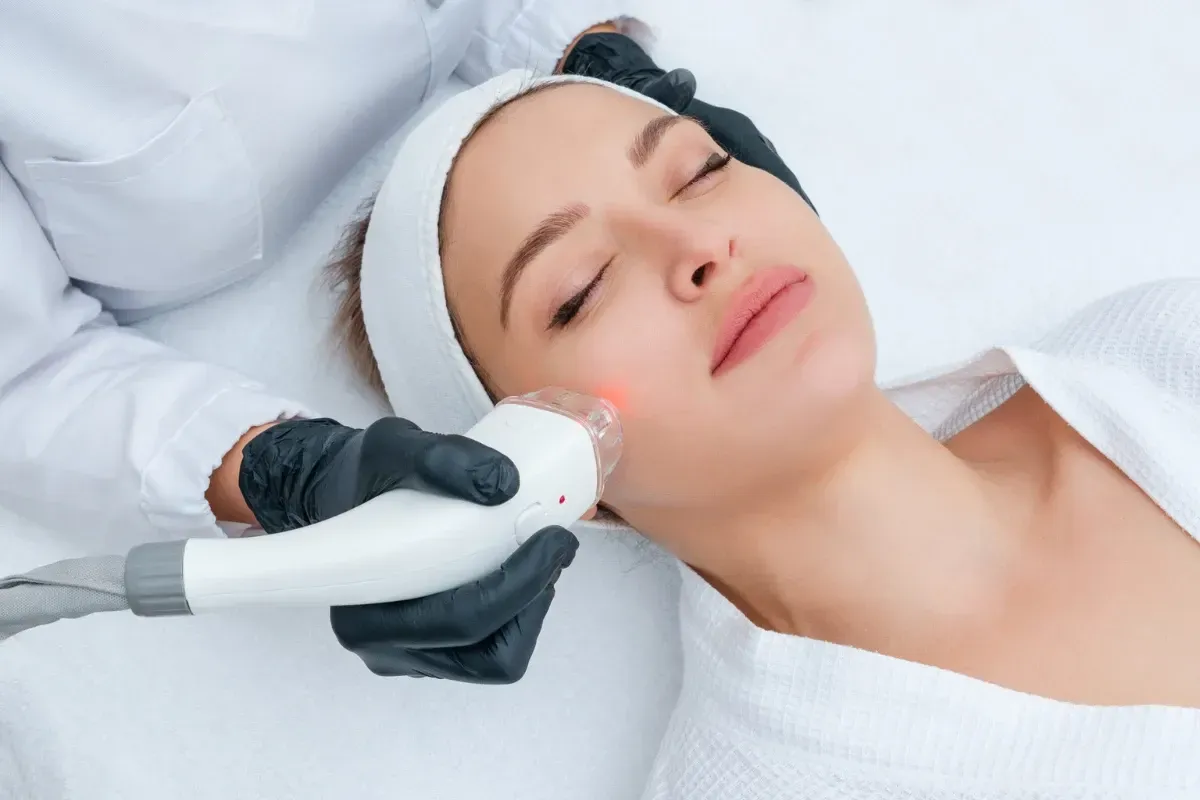
Role of Lasers in Treating Hyperpigmentation and Dark Spots
Pigmentation often becomes noticeable in small but frustrating ways. A dark mark that lingers after acne, patches that stand out more in sunlight, or an uneven tone that makes the skin look less clear and radiant than before. These changes may seem minor at first, but over time, they can make the skin appear tired, patchy, and harder to manage with regular skincare alone.
When creams and serums stop giving visible improvement, many patients start looking for treatments that can target pigment more precisely. Laser treatment options can help by focusing on unwanted pigment deeper within the skin, but the right results depend on choosing the correct technology for the correct concern.
Why Hyperpigmentation and Dark Spots Happen
Pigmentation is not a single problem. It is a visible sign that melanin production has changed in certain areas of the skin. Melanin is the natural pigment that gives skin its color, but when the skin is triggered by inflammation, sun exposure, hormones, or injury, some areas start producing more pigment than they should.
That is why not every dark mark should be treated the same way. Before choosing any procedure, it is essential to understand what type of pigmentation you are dealing with.
Common causes include:
Post-inflammatory marks after acne, eczema, rashes, or skin irritation
Sun spots or age spots caused by chronic UV exposure
Melasma, often linked to hormones, heat, genetics, and sun sensitivity
Pigmentation after cosmetic procedures or skin trauma
Uneven tone from repeated friction or inflammation
This is exactly why a proper diagnosis matters. A treatment that works beautifully for post-acne marks may worsen melasma if the wrong energy or settings are used.
Why Creams Alone Sometimes Stop Working
Many people start with brightening creams, exfoliating acids, vitamin C, retinoids, or pigment-correcting serums. These can be useful, especially for mild or superficial discoloration. But when the pigment is deeper, more stubborn, or repeatedly triggered, topical care alone may not create enough change.
This is where laser treatment becomes clinically relevant. Instead of relying only on surface-level ingredients, lasers deliver focused energy into the skin to target excess pigment more directly.
This makes them particularly useful when:
Dark spots have been present for months
Pigment returns repeatedly despite skincare
The marks are deeper or more sharply defined
Uneven tone is affecting overall skin clarity
You want a more structured and medically guided approach
How Lasers Help Break Down Pigment
Lasers work by delivering controlled light energy into the skin. That energy is absorbed by pigment particles, which are then fragmented into smaller pieces. Over time, the body’s natural clearance processes gradually remove those broken-down pigment particles.
This is the principle behind hyperpigmentation laser therapy. The goal is not to “burn off” the skin. The goal is selective targeting. When done correctly, the laser focuses on pigment while minimizing unnecessary damage to surrounding tissue.
This selective approach can help with:
Sun-induced brown spots
Certain post-inflammatory marks
Freckles and superficial pigmented lesions
Uneven skin tone caused by excess melanin
Some carefully selected melasma cases, with strict caution
However, it is very important to understand that not every pigmented condition is a straightforward laser candidate. Some conditions need combination care, slower treatment planning, or even avoidance of certain devices altogether.
Not All Lasers Work the Same Way
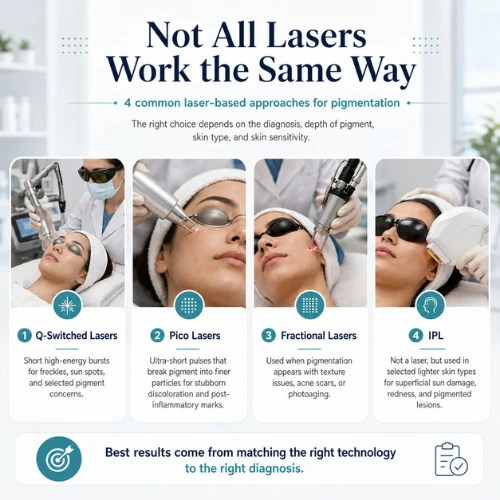
Patients often ask for the best laser for skin pigmentation, but the truth is that there is no universal answer. The right laser depends on the cause of the pigmentation, its depth, your skin type, and how reactive your skin is.
Different lasers are designed for different pigment targets. Some are better for superficial epidermal pigment. Others can target deeper lesions. Some are ideal for isolated dark spots, while others are used more cautiously in diffuse or hormonally driven pigmentation.
Common laser-based approaches may include:
1. Q-Switched Lasers
These deliver short bursts of high energy to target pigment particles. They are often used for freckles, sun spots, and selected pigmentation issues where controlled pigment fragmentation is needed.
2. Pico Lasers
These use ultra-short pulses and are designed to break pigment into even finer particles. They can be useful in selected patients with stubborn discoloration, post-inflammatory marks, or mixed pigment concerns.
3. Fractional Lasers
These are sometimes used when pigmentation coexists with texture issues, acne scars, or photoaging. They create controlled micro-injury zones that support skin renewal, but they must be chosen very carefully in darker skin tones because post-inflammatory pigment changes can happen if settings are too aggressive.
4. IPL (Intense Pulsed Light)
While not technically a laser, IPL is often discussed alongside laser devices. It can help in selected lighter skin types with superficial sun damage, redness, and pigmented lesions. It is not suitable for everyone and needs careful patient selection.
So when people search for a laser for dark spot removal, the real answer is not a brand name. It is matching the right technology to the right diagnosis.
Who Is a Good Candidate for Laser Pigment Treatment?
Laser-based pigmentation treatment can be highly effective, but it is not for everyone.
Good candidates usually include people who have:
Stable, clearly diagnosed dark spots
Sun spots or age-related pigmentation
Post-acne marks that are not actively inflamed
Isolated pigmented lesions affecting overall skin clarity
Realistic expectations about gradual results
Patients who need more caution include those with:
Active acne or active skin inflammation
Uncontrolled melasma
Recent tanning or ongoing sun exposure
Very sensitive or reactive skin
A history of post-inflammatory pigmentation after procedures
Inconsistent sunscreen use
In these patients, jumping straight into an aggressive session can backfire. Pigmentation treatment is not just about removing color. It is about controlling triggers and preventing rebound.
Why Skin Tone Matters So Much
Darker and medium skin tones can absolutely be treated with lasers, but the approach must be more careful. Melanin-rich skin is more reactive. If the wrong settings are used or if the skin barrier is already inflamed, the treatment can trigger more pigment instead of less.
This is why treatment planning must consider:
Fitzpatrick skin type
Recent sun exposure
History of pigmentation after waxing, peels, or procedures
Barrier health
Heat sensitivity
Whether the pigment is epidermal, dermal, or mixed
In many patients, a conservative protocol with multiple sessions is safer and smarter than trying to achieve dramatic change too quickly.
What Happens During a Laser Session?
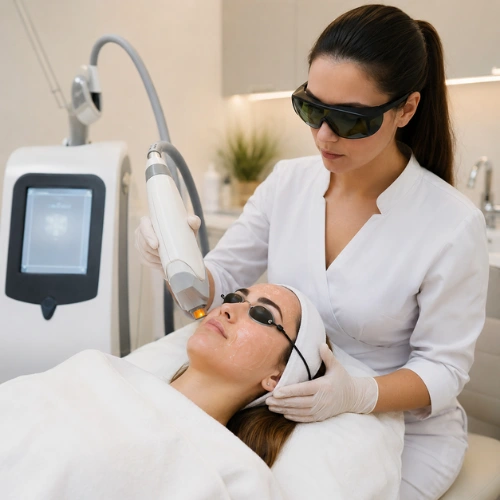
A pigmentation laser session is usually straightforward, but it still needs proper preparation.
A typical treatment plan may include:
Skin assessment and diagnosis
The pigment pattern, depth, triggers, and skin type are evaluated before choosing any device.Pre-treatment preparation
In some cases, patients may be advised to stop certain active ingredients, avoid sun exposure, or use preconditioning products before the session.Cleansing and protection
The skin is cleaned, and protective eyewear is used.Laser delivery
The selected device is passed over the target areas. Depending on the laser, you may feel warmth, snapping, or mild prickling.Post-treatment calming
Cooling, soothing products, and strict aftercare are usually recommended.
Some spots may darken temporarily before they lighten. This is often part of the natural treatment response, especially in superficial pigmented lesions.
How Many Sessions Are Usually Needed?
This depends entirely on the type of pigmentation.
Superficial sun spots may respond in fewer sessions
Post-inflammatory marks may improve gradually over a few sessions
Mixed or deeper pigment often needs more patience
Melasma may need combination care and maintenance rather than “quick removal.”
Patients should not expect all pigmentation to disappear after one sitting. Even when improvement is visible early, true results often come from a structured series of treatments combined with strict pigment control at home.
What Results Can You Realistically Expect?
Laser pigment treatment can improve:
Overall skin clarity
Uneven tone
Sharp dark spots
Post-acne discoloration
Sun damage-related brown patches
Skin brightness and visual smoothness
But realistic expectations matter.
Lasers can reduce, soften, and improve pigmentation significantly in the right case. They do not always guarantee complete erasure, especially in hormonally driven or recurrent conditions. In some patients, the goal is not a perfect blank skin. The goal is safer, more controlled improvement with less recurrence and better overall skin quality.
This is especially true when patients are seeking clear dark spots laser treatment and expect instant, permanent results. Skin does not work that way. Pigment behaves based on biology, triggers, and aftercare.
Why Aftercare Decides the Quality of Results
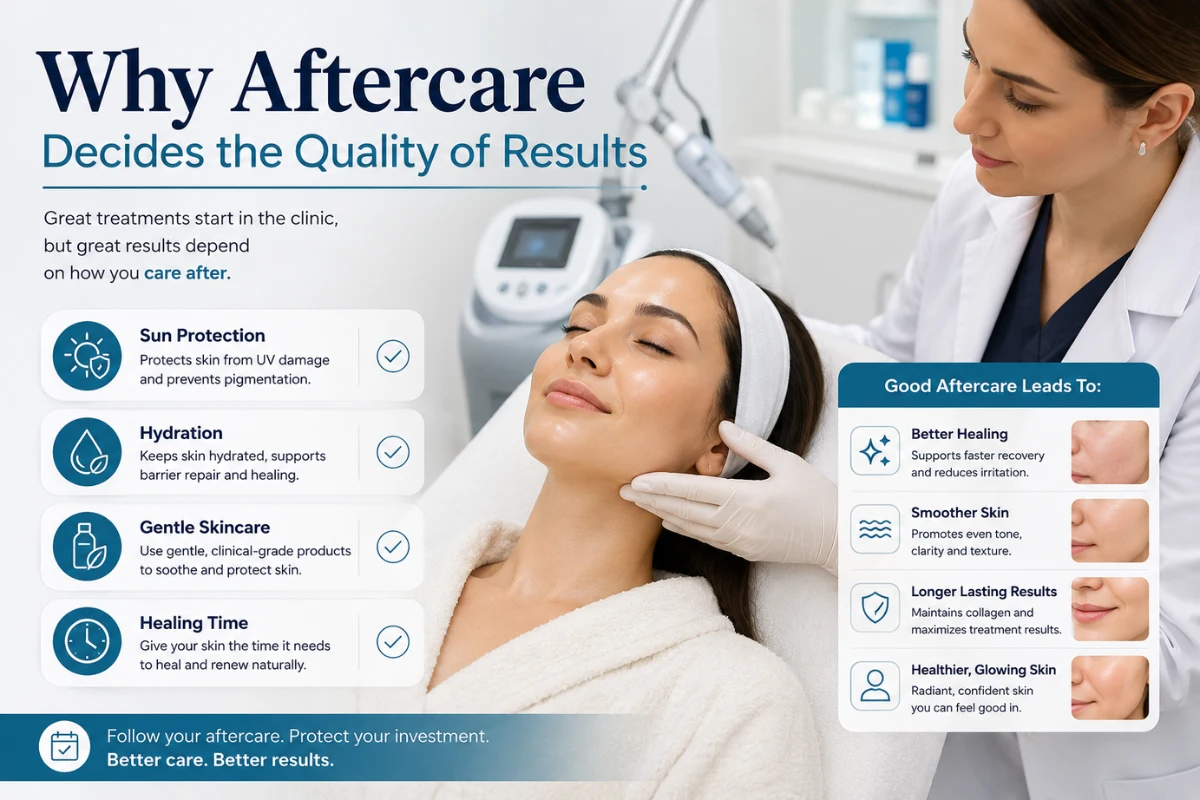
This part is often underestimated. A beautifully performed laser session can still fail if aftercare is poor.
Post-treatment care usually focuses on:
Strict sunscreen use every single day
Avoiding direct sun and heat exposure
Avoiding harsh scrubs, acids, or irritation immediately after treatment
Using barrier-supportive skincare
Following medical guidance for maintenance creams if advised
Heat, friction, picking, tanning, and overusing actives too soon can all increase the risk of rebound pigment.
If a patient asks why someone else got a better result from the “same laser,” the answer is often not the machine. It is diagnosis, settings, and aftercare.
Are Lasers Safe for Melasma?
This needs a separate mention because melasma is often misunderstood.
Melasma is not just pigment sitting on the surface. It is a chronic, trigger-sensitive condition influenced by hormones, heat, sun, inflammation, and vascular changes. Some laser treatments can help selected melasma patients, but some can also worsen it if the approach is too aggressive.
That means:
Melasma should never be treated casually
Not every laser is suitable
Lower-energy, carefully chosen protocols may be considered in selected cases
Maintenance is often necessary
Topicals, sun protection, and trigger control remain essential
If someone has melasma and wants a “quick pigment laser,” caution is more important than speed.
Combining Lasers With Other Treatments
Lasers often work best when they are not used in isolation.
Depending on the diagnosis, the treatment plan may also include:
Medical-grade pigment-control skincare
Sun protection protocols
Barrier repair support
Chemical peels in selected patients
Anti-inflammatory skin prep
Lifestyle changes around heat and sun exposure
This is especially relevant in patients with recurrent pigmentation, melasma tendencies, or post-inflammatory darkening. The best outcomes often come from a combination plan, not a one-session mindset.
When You Should Seek Expert Evaluation
You should consider a proper assessment if:
Dark spots are not improving with skincare
Pigmentation keeps returning
Your marks are becoming more obvious over time
You have melasma or suspect hormonally driven pigmentation
You have darker skin and want to avoid worsening the issue
You are considering a laser and want the safest option for your skin
The earlier the diagnosis is made, the easier it is to choose the right path. Treating pigment without understanding the cause is how many people waste time, money, and skin barrier health.
Final Thoughts
Pigmentation can be stubborn, but it doesn’t have to be a guessing game. When used correctly, advanced lasers can effectively reduce dark spots and improve uneven skin tone, especially when creams alone no longer work.
The key is not using the strongest laser, but choosing the right treatment for your specific pigment type, skin tone, and condition, along with a proper long-term plan.
If you’re struggling with hyperpigmentation and want to know if laser treatment is suitable for your skin, an expert evaluation is the best first step.
To learn more or book a consultation with Dr. Mayur Bhobe in Dubai, contact @+971 507 256 753.

