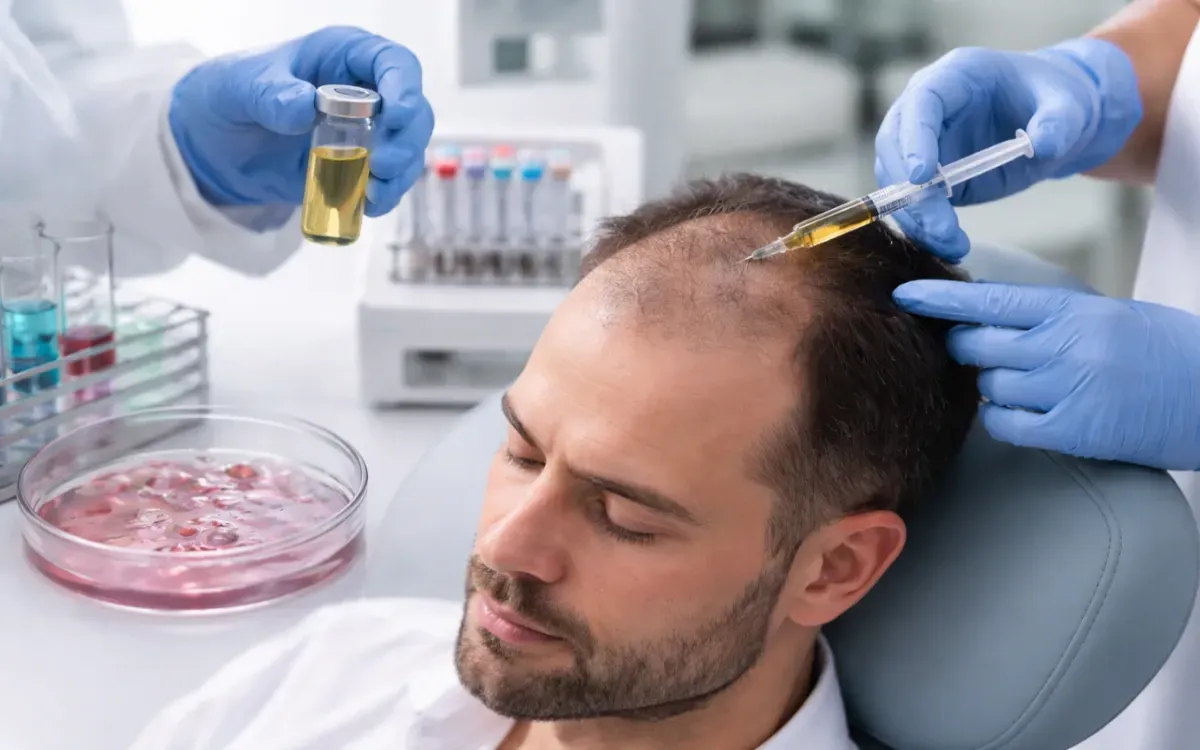
Role of Stem Cell-Based Treatments in Hair Restoration Success
Hair thinning has a way of becoming personal very quickly. It may begin with extra strands on your pillow, a widening part, or a hairline that does not look the same in pictures anymore. What seems minor at first can slowly start affecting how you feel about your appearance, your confidence, and even how you style your hair each day. That is why more people today are not just asking how to stop hair loss, but how to restore healthier, stronger growth in a more meaningful way.
This shift is exactly why stem cell-based treatments are drawing so much interest in modern hair restoration. Instead of focusing only on surface-level solutions, these regenerative approaches aim to improve the scalp environment, support weakened follicles, and encourage the conditions needed for better long-term hair growth.
Why Hair Restoration Has Moved Beyond Basic Solutions
For years, many patients only had a few familiar options when it came to hair loss:
Topical products
Oral medications
Hair transplant surgery
Cosmetic camouflage methods
While these can still play an important role, the field of hair restoration has evolved significantly. Today, the conversation is shifting toward regenerative medicine, which aims to support weakened follicles, improve the scalp’s biological environment, and potentially extend the life and performance of existing hair follicles.
That is where stem cell-based technologies have entered the picture.
Instead of only trying to “force” hair growth, regenerative treatments focus on helping the follicle environment function better. This is especially important because in many cases of hair thinning, the follicles are not completely gone. They are often weakened, miniaturised, inflamed, or metabolically less active.
That distinction matters.
What Does “Stem Cell-Based Hair Treatment” Actually Mean?
This is where many patients get confused, because the term “stem cell” is often used too loosely online.
In hair restoration, stem cell-based treatments generally refer to regenerative therapies designed to harness stem cell-derived signals, growth factors, exosomes, or biologically active components that may help support hair follicle function and scalp repair.
In simple terms, these treatments aim to:
Improve the scalp environment
Support weakened or miniaturising follicles
Encourage healthier follicle activity
Reduce inflammatory stress around the follicle
Promote stronger, better-quality regrowth in suitable candidates
This is why stem cell therapy for hair loss is often discussed as part of the next generation of non-surgical hair restoration.
It is important to understand that not every treatment marketed under the word “stem cell” is the same. Some are true regenerative protocols using advanced biologic materials or cell-derived signalling technologies. Others may be more limited or may simply use the term as a marketing shortcut. That is why expert consultation is essential before choosing any treatment plan.
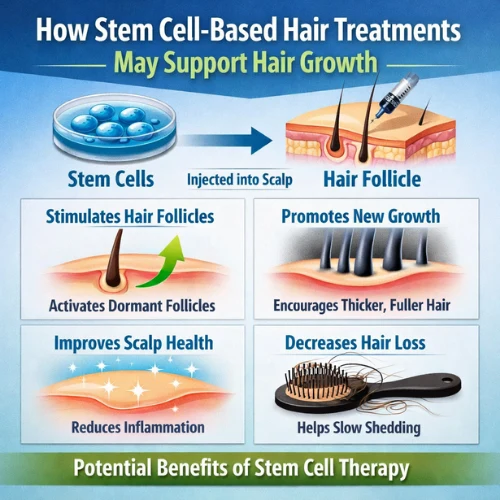
How Stem Cell-Based Hair Treatments May Support Hair Growth
Hair follicles are biologically active mini-organs. They need blood supply, growth signals, healthy surrounding tissue, and the right microenvironment to produce thick, consistent strands.
When hair begins to thin, several things may be happening:
The follicle growth cycle becomes shorter
The anagen (growth) phase weakens
Follicles begin to miniaturise
Inflammation or oxidative stress affects follicle performance
Scalp circulation and cellular communication become less efficient
Stem cell-based approaches are being explored because they may help influence some of these underlying biological processes.
Potential benefits may include:
1. Supporting Cellular Signalling Around the Follicle
Regenerative biologic treatments may provide growth factors and signalling molecules that help “wake up” underperforming follicles.
2. Improving the Scalp Microenvironment
A healthy scalp is not just about clean skin. It is about tissue quality, vascular support, reduced inflammation, and better cellular communication.
3. Helping Miniaturised Follicles Function Better
In early to moderate hair thinning, follicles are often still present, but producing finer, weaker hair. Regenerative support may help improve their performance.
4. Enhancing Recovery and Response
In some cases, stem cell-based strategies may be used to complement other treatments such as PRF, medical therapy, or even post-transplant recovery protocols.
This is why patients are increasingly curious about natural hair regrowth stem cells, because the concept feels less about forcing a cosmetic result and more about helping the scalp restore healthier biological function.
Are Stem Cell Treatments Replacing PRP or PRF?
Not necessarily, and this is an important point.
PRP and PRF remain highly valuable in hair restoration, especially when used correctly and early. They work by using your own blood-derived growth factors to support scalp healing and follicle stimulation.
Stem cell-based treatments, depending on the protocol used, may offer:
A broader regenerative signalling profile
More advanced tissue communication support
A complementary role in more complex or resistant cases
A stronger regenerative angle in selected patients
However, they are not always a “replacement.” In many modern clinics, regenerative hair restoration is becoming more layered and personalised, which may include:
Clinical diagnosis of the hair loss type
Scalp analysis
PRF or PRP support
Prescription support where indicated
Exosome or stem cell-derived regenerative protocols
Nutritional and hormonal evaluation
Ongoing maintenance
The future is not one treatment replacing all others.
The future is combination-based precision treatment.
Who Is a Good Candidate for Stem Cell-Based Hair Restoration?
As with all hair treatments, patient selection matters more than hype.
Stem cell-based approaches are usually most helpful when:
Hair thinning is early to moderate
Follicles are still alive but weakened
The scalp needs regenerative support
Patients want non-surgical or adjunctive options
There is diffuse thinning, reduced density, or miniaturisation
The goal is to preserve and strengthen existing hair
You may be a good candidate if you notice:
A widening hair part
Thinning at the crown
Diffuse shedding
Reduced hair density
Early recession
Hair becoming finer over time
Post-stress or post-illness thinning
Early androgenetic hair loss
When results may be limited
If there is:
Long-standing complete baldness
Scarring alopecia
Untreated hormonal imbalance
Severe follicle loss
Advanced male pattern baldness with inactive follicles
Then stem cell-based treatments may have limited results unless used as part of a larger plan.
This is where realistic assessment is essential. No regenerative treatment should be sold as magic.
Can Stem Cell-Based Treatments Help with Hair Transplants?
Yes, and this is one of the most interesting areas of development.
Hair transplant surgery remains a strong option for selected patients, especially when there are areas of established follicle loss that need redistribution from donor zones. But even in transplant medicine, regenerative therapies are becoming more relevant.
Stem cell-based support may be considered in some cases to:
Improve scalp quality before a transplant
Support healing after the procedure
Help optimise graft survival environment
Strengthen surrounding native hair
Enhance overall cosmetic outcome
This is one reason the discussion around stem cell hair transplant success has grown in recent years. It is not always about replacing transplantation. Sometimes it is about improving the conditions around it.
A better scalp environment can influence healing, tissue recovery, and the appearance of both transplanted and native hair over time.
What Happens During a Stem Cell-Based Hair Treatment Session?
The exact process depends on the type of regenerative protocol being used, because “stem cell-based” can refer to different medically supervised approaches.
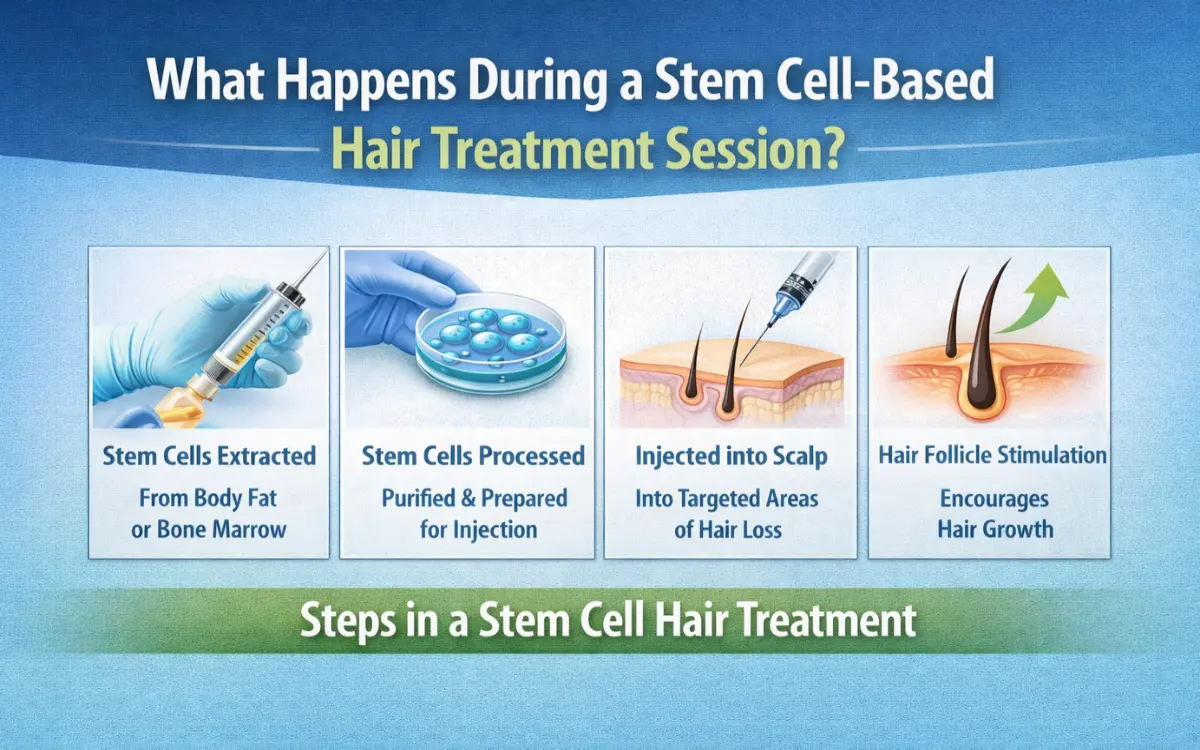
However, a typical in-clinic process may involve:
1. Hair and Scalp Consultation
This is the most important step. The doctor evaluates:
Pattern of thinning
Scalp condition
Family history
Possible hormonal or nutritional triggers
Whether follicles appear miniaturised or inactive
Whether the patient needs diagnostic work-up first
2. Treatment Planning
The doctor determines whether stem cell-based therapy is suitable as:
A standalone early-stage treatment
A booster alongside PRF/PRP
Part of a combined hair restoration protocol
Support around transplant planning or maintenance
3. Scalp Preparation
The treatment area is cleaned and prepared.
4. Delivery of the Regenerative Material
Depending on the protocol, the biologically active material may be delivered through targeted scalp injections or another controlled delivery method.
5. Post-Treatment Guidance
Patients are usually given instructions about:
Washing the scalp
Avoiding irritation
Managing mild tenderness
Follow-up timing
When to combine with other therapies
Most patients can return to normal routine fairly quickly, depending on the exact protocol used.
How Soon Can You See Results?
This is where patients need honest guidance.
Hair growth is slow by nature. Even when follicles respond well, the visible hair shaft needs time to emerge, lengthen, and thicken.
Common timeline expectations:
First few weeks: some patients notice reduced shedding
2–3 months: early changes in texture or baby hair activity may appear
3–6 months: better visible improvement in density and quality
6+ months: cumulative improvement when the follicles are responsive
This is why advanced stem cell hair treatment should always be viewed as a long-term biological investment, not an overnight cosmetic trick.
The best results come from:
Early intervention
Correct diagnosis
Proper treatment intervals
Combining therapies when appropriate
Managing the root cause of hair thinning
What Makes Regenerative Hair Treatments More Successful?
Success in hair restoration is not only about the treatment itself.
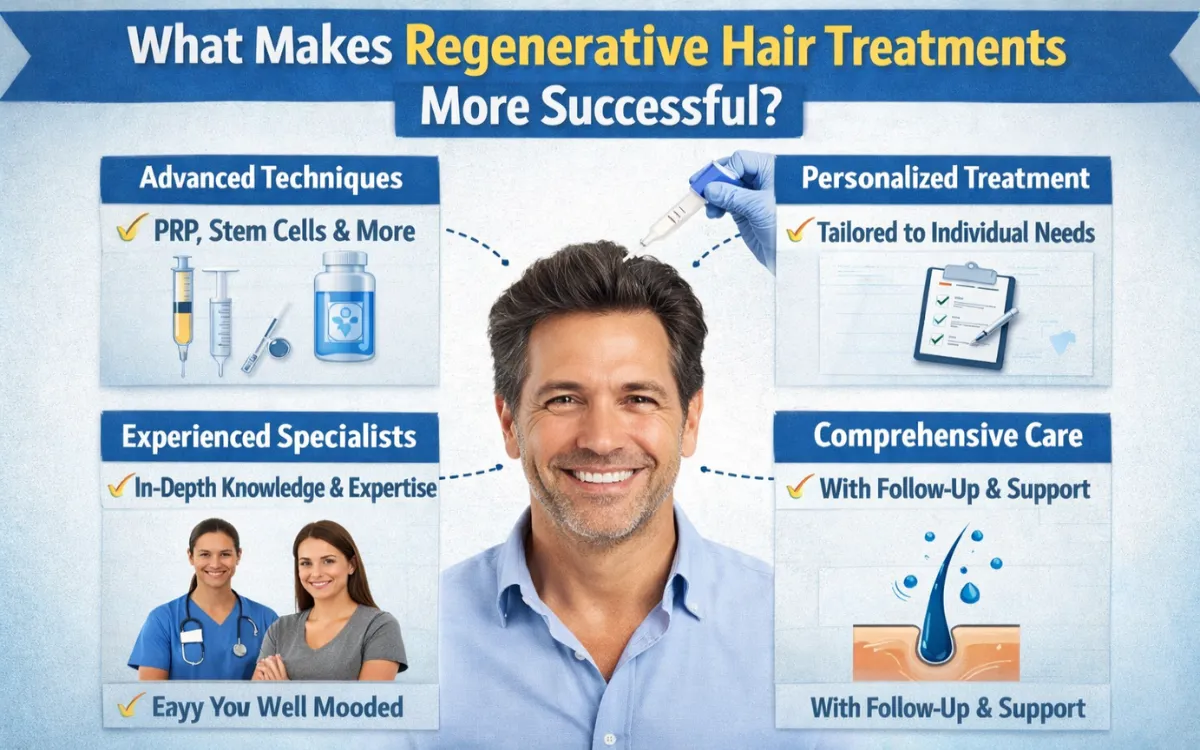
It depends on several important factors:
1. Early Timing
The sooner you treat thinning, the more follicles may still be viable.
2. Correct Diagnosis
Not all hair loss is genetic. Some cases involve thyroid issues, iron deficiency, stress, hormonal shifts, inflammation, or scalp disease.
3. Scalp Health
A healthy scalp supports better follicle function. If the scalp is inflamed or neglected, results can be limited.
4. Consistency
One session rarely defines the final outcome. Regenerative hair care often needs a planned series and maintenance.
5. Combination Planning
Some patients need biologics plus medical therapy. Others need regenerative support plus transplant planning. The best treatment is rarely “one-size-fits-all.”
Final Thoughts
Hair restoration works best when it is done early, with the right diagnosis and the right regenerative approach. Stem cell-based treatments are not about quick fixes. They are about supporting follicle health, scalp quality, and long-term hair preservation in a more intelligent, biologically driven way.
If you are noticing thinning, increased shedding, or reduced density, this is the right time to get it assessed. Treatment is always guided by what your scalp and follicles actually need. To explore medically guided regenerative hair solutions, book a consultation with Dr. Mayur Bhobe in Dubai, contact @+971 507 256 753.

