
How to Protect Skin from Sun Damage in Harsh Dubai Weather
Living in Dubai means sunshine is part of everyday life. Bright days, outdoor lifestyles, and year-round warmth are appealing, but constant sun exposure can quietly take a toll on your skin if it is not managed correctly. Many people associate sun damage only with tanning or sunburn, yet the real impact often goes much deeper and becomes visible years later.
Effective sun protection is not about avoiding the sun altogether. It is about understanding how ultraviolet exposure affects your skin and building consistent, practical habits to reduce damage. With the right approach, it is possible to enjoy outdoor life in Dubai while maintaining healthy, resilient skin, even in challenging weather conditions.
Why Sun Damage Is More Aggressive in Dubai
Dubai’s climate exposes the skin to intense ultraviolet radiation for most of the year. The combination of heat, reflective surfaces, and extended daylight hours significantly increases cumulative UV exposure.
Key factors that worsen sun damage skin in Dubai include:
Strong UV index throughout the year
High temperatures that increase skin sensitivity
Long hours of daylight
Frequent outdoor commuting
Regular beach and poolside exposure
Over time, this exposure leads to premature ageing, uneven pigmentation, rough skin texture, and gradual loss of skin elasticity. These changes often develop slowly, which is why many people underestimate the long-term impact of daily sun exposure.
Understanding UV Radiation and Its Impact on Skin
Ultraviolet radiation is divided into two main types that affect the skin differently.
UVA Rays
Penetrate deeper into the skin
Break down collagen and elastin
Contribute to wrinkles and skin ageing
UVB Rays
Affect the surface layers of the skin
Cause sunburn and redness
Increase the risk of skin cancer
Effective uv protection must shield the skin from both UVA and UVB rays. Preventing tanning alone is not enough, as deeper structural damage can occur even without visible sunburn.
Why Sunscreen Is Non-Negotiable in Dubai
Daily use of sunscreen is one of the most effective ways to protect the skin in Dubai’s environment. Despite this, many people either skip sunscreen altogether or apply it incorrectly.
Sunscreen helps to:
Reduce pigmentation and uneven tone
Prevent premature ageing
Protect collagen levels
Lower the risk of long-term skin damage
Sunscreen is not only necessary for beach days or outdoor activities. UV exposure occurs during short errands, while driving, and even through windows. Making sunscreen a daily habit is essential rather than optional.
Choosing the Best SPF for Dubai Conditions
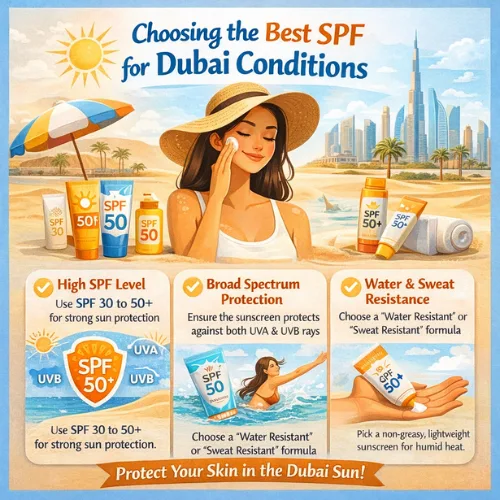
Not all sunscreens are suitable for intense heat and prolonged sun exposure. Selecting the best spf in Dubai depends on your skin type, daily routine, and level of outdoor exposure.
General guidelines include:
SPF 30 minimum for daily use
SPF 50 for prolonged outdoor exposure
Broad-spectrum protection
Water and sweat resistance
Consistency is more important than the SPF number alone. An SPF 50 applied once in the morning offers less protection than SPF 30 reapplied correctly throughout the day.
How to Apply Sunscreen Correctly
Incorrect sunscreen application significantly reduces its effectiveness.
Important points to remember:
Apply sunscreen 15 to 20 minutes before sun exposure
Use a generous amount on the face and all exposed areas
Reapply every two to three hours when outdoors
Do not forget ears, neck, hands, and around the eyes
Sunscreen works best when applied regularly and generously. Treat it as a core skincare step rather than an afterthought.
Clothing and Accessories That Support Sun Protection
Sunscreen alone is often not enough in harsh sun conditions. Combining topical protection with physical barriers improves overall effectiveness.
Helpful additions include:
Wide-brimmed hats
UV-protective sunglasses
Lightweight long-sleeved clothing
Umbrellas during peak sun hours
These measures reduce direct UV exposure and complement sunscreen, especially during extended outdoor activities.
Timing Outdoor Activities Wisely
The sun is strongest between late morning and mid-afternoon. While avoiding the sun entirely may not be practical, adjusting timing can significantly reduce cumulative damage.
Whenever possible:
Schedule outdoor activities earlier in the morning or later in the evening
Take regular shade breaks
Avoid prolonged direct exposure during peak hours
Small timing adjustments can make a noticeable difference in reducing UV stress on the skin over time.
Hydration and Its Role in Sun Protection
Hydrated skin tolerates sun exposure better than dehydrated skin. When hydration levels drop, the skin barrier weakens, making the skin more vulnerable to irritation and damage.

To support skin resilience:
Drink water consistently throughout the day
Use hydrating skincare products
Avoid excessive exfoliation
Hydration does not replace sunscreen, but it strengthens the skin’s ability to cope with environmental stress and recover more efficiently.
Recognising Early Signs of Sun Damage
Early detection of sun damage allows for timely intervention and prevents more severe issues later.
Signs to watch for include:
Uneven skin tone
Persistent pigmentation
Fine lines appearing earlier than expected
Rough or dull texture
Addressing these signs early helps prevent deeper structural damage and supports long-term skin health.
Professional Care for Sun-Damaged Skin
Even with good habits, sun exposure accumulates over time. Professional treatments can help manage existing damage and support skin repair.
Options may include:
Medical-grade skincare
Hydration-focused treatments
Pigmentation management
Collagen-support therapies
A personalised treatment plan ensures that care is suited to your skin type, concerns, and level of sun exposure.
Common Myths About Sun Protection
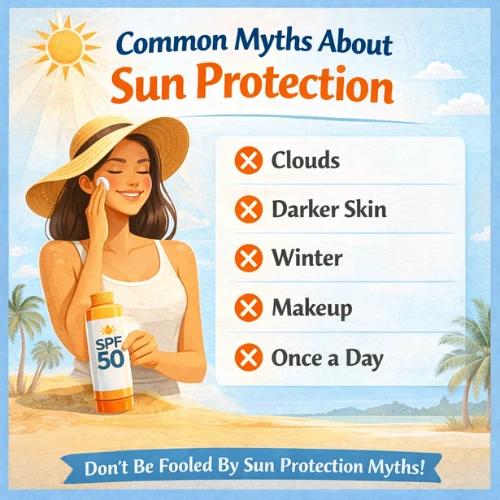
Darker Skin Does Not Need Sunscreen
Darker skin still experiences UV damage and is prone to pigmentation and premature ageing.
Sunscreen Causes Breakouts
Choosing the right formulation for your skin type reduces this risk significantly.
One Application Is Enough
Reapplication is essential, especially in hot and humid conditions.
Making Sun Protection a Daily Routine
Consistency is key when it comes to sun protection. It works best when it becomes part of your daily routine rather than a reaction to sun exposure.
Daily habits support:
Healthier skin over time
Reduced signs of premature ageing
Better response to skincare and treatments
Protecting your skin today reduces the need for corrective treatments later.
Long-Term Benefits of Proper Sun Protection
Consistent sun protection helps preserve:
Skin elasticity
Even skin tone
Smooth texture
Overall skin resilience
Patients who practise regular sun protection often notice that their skin ages more gradually and responds better to aesthetic treatments.
Final Thoughts on Sun Protection in Dubai
Sun exposure is unavoidable in Dubai, but sun damage is not inevitable. With the right understanding and daily habits, it is possible to protect your skin effectively without compromising your lifestyle.
Sun protection is not a single product or action. It is a combination of awareness, consistency, and smart choices that support skin health year after year.
Conclusion
Protecting your skin from Dubai’s intense sun requires daily awareness and consistent care. For personalised advice on sun protection and managing sun-related skin concerns, consult Dr. Mayur in Dubai. To assess your skin or plan preventive care, contact +97150256753 and take a proactive step towards long-term skin health.

