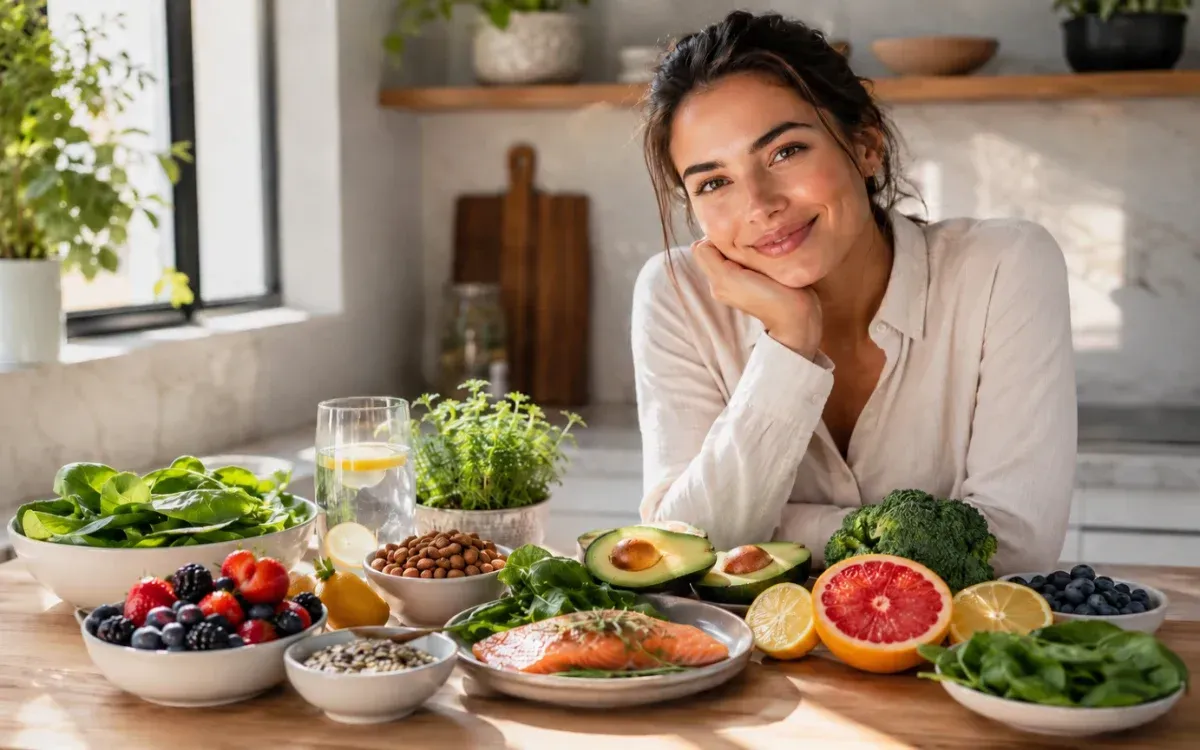
Role of Nutrition in Promoting Long-Term Skin Health & Vitality
Your skincare routine may sit on your shelf.
But your skin’s real long-term story is often being written on your plate.
Many people invest in cleansers, serums, facials, and treatments, yet still wonder why their skin feels dull, inflamed, tired, or slower to recover. The truth is simple: healthy skin is not built only from the outside. It is supported every single day by what your body absorbs, repairs with, and stores over time. That is why nutrition for healthy skin matters far more than most people realise.
One thing is clear: glowing, resilient, youthful-looking skin is rarely the result of one miracle product. It is usually the outcome of good skin habits, smart treatments when needed, and internal support that strengthens the skin from within.
Why Skin Health Starts From the Inside
Skin is not just a surface.
It is a living organ that depends on:
Blood circulation
Hydration
Cellular repair
Collagen production
Hormonal balance
Inflammation control
Antioxidant defence
Nutrient delivery
This means your skin constantly reflects what is happening internally.
When the body is undernourished, inflamed, dehydrated, or lacking key vitamins and minerals, the skin often shows it first through:
Dullness
Dryness
Delayed healing
Increased sensitivity
More breakouts
Reduced elasticity
Uneven tone
Early fine lines
A tired or “flat” appearance
That is why topical skincare can only do so much if the body does not have the raw materials needed to repair and maintain healthy skin tissue.
What Your Skin Actually Needs to Stay Healthy Over Time
Many people think “eat healthy” is enough. It is a good start, but skin health benefits most when nutrition is specific, not just general.
The skin needs a consistent supply of nutrients that support:
Collagen synthesis
Barrier repair
Antioxidant protection
Oil balance
Inflammation control
Cell turnover
Wound healing
Hydration retention
These needs become even more important with age, because collagen naturally declines, recovery slows, and environmental damage accumulates.
This is why anti-aging nutrition skin is not about chasing trends. It is about supporting the biological systems that keep skin stronger, calmer, and more resilient for years.
How Nutrition Directly Affects Skin Ageing
Skin ageing is influenced by genetics, hormones, sun exposure, lifestyle, and environmental stress. But nutrition plays a major supporting role in how quickly or slowly the skin shows these changes.
Poor nutrition can contribute to:
Increased oxidative stress
Glycation damage (which weakens collagen and elastin)
Chronic low-grade inflammation
Slower skin repair
Reduced barrier function
Weaker hydration retention
More visible fatigue and dullness
Good nutrition can support:
Better collagen maintenance
Stronger barrier integrity
More even skin tone
Reduced inflammatory triggers
Improved recovery after treatments
Better resilience against environmental stress
Healthier ageing overall
Think of it this way: if your skin is constantly trying to repair sun exposure, pollution, stress, and inflammation, it needs the right internal tools to do that well.
The Nutrients That Matter Most for Skin Health
Not every nutrient has the same impact on the skin. Some play a much more direct role in long-term skin quality.
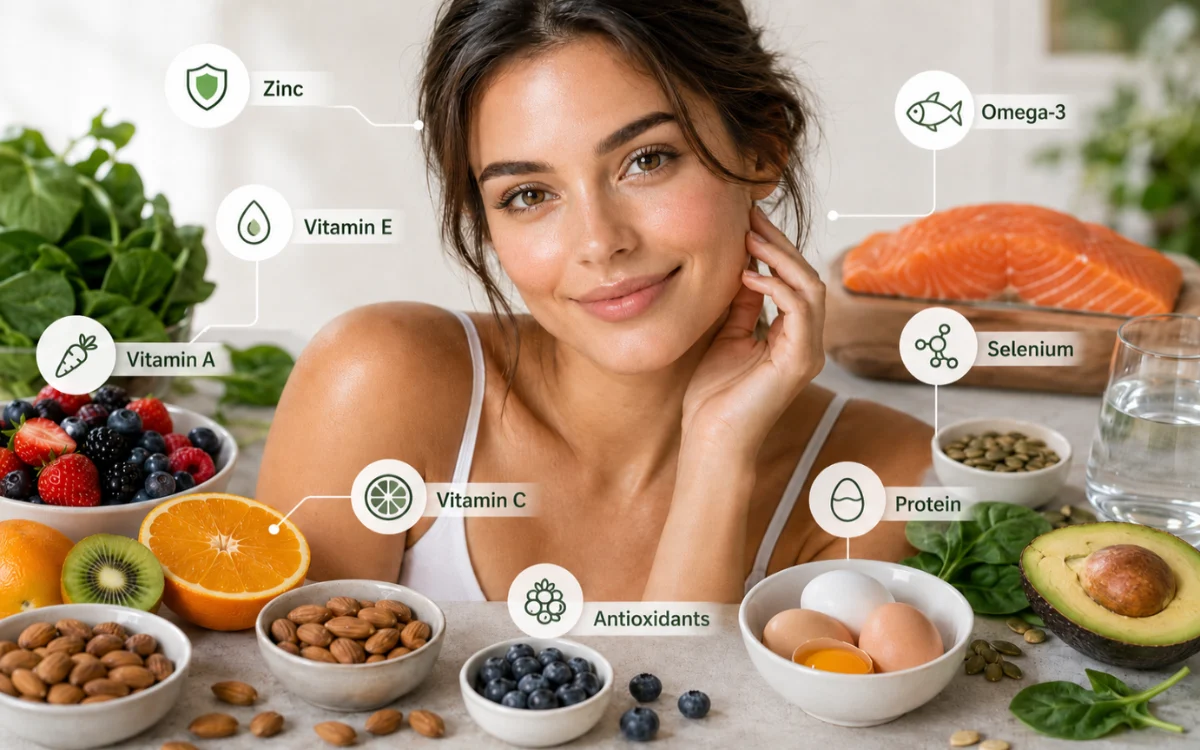
1. Protein: The Foundation of Skin Repair
Skin structure depends heavily on proteins, especially collagen, elastin, and keratin.
If your protein intake is poor or inconsistent, the body has fewer building blocks available for:
Tissue repair
Hair and nail support
Collagen formation
Post-procedure healing
Maintaining skin strength
Good protein sources include:
Eggs
Fish
Chicken
Greek yoghurt
Lentils
Beans
Tofu
Paneer
Lean meats
Without enough protein, even the best skincare routine may struggle to show its full effect.
2. Vitamin C: Essential for Collagen Production
Vitamin C is one of the most important nutrients for skin because it supports collagen synthesis and helps protect the skin from oxidative stress.
It also supports:
Brighter-looking skin
Wound healing
Free radical defence
Reduced visible stress on the skin
Food sources include:
Citrus fruits
Guava
Kiwi
Bell peppers
Strawberries
Amla
Broccoli
This is especially important for patients investing in collagen-stimulating treatments, because collagen support should not only come from the outside.
3. Healthy Fats: Critical for Barrier Strength and Glow
Many people cut fats too aggressively and then wonder why their skin feels dry, reactive, or “lifeless.”
Healthy fats support:
Cell membrane health
Skin softness
Barrier function
Reduced transepidermal water loss
Inflammation control
Hormonal balance
This is one reason a diet for glowing skin long term should always include the right types of fats, not just low-calorie foods.
Good sources include:
Avocados
Nuts
Seeds
Olive oil
Fatty fish
Flaxseeds
Chia seeds
Walnuts
Skin that glows is often skin that is well-supported at the barrier level, not just exfoliated.
4. Zinc: Underrated but Important
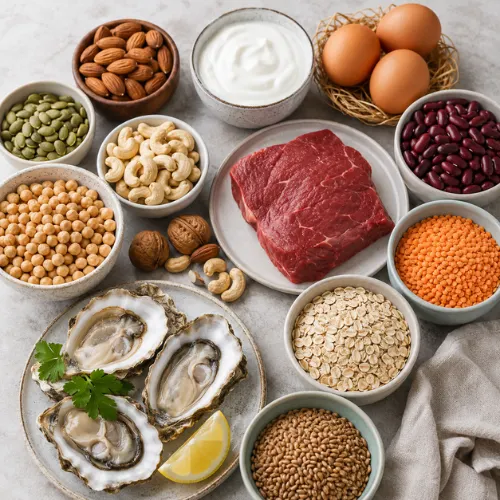
Zinc plays a major role in:
Skin healing
Oil regulation
Inflammation control
Acne-prone skin support
Immune function
Tissue repair
Low zinc levels can sometimes contribute to:
Slower healing
More breakouts
Increased irritation
Poor skin recovery
Food sources include:
Pumpkin seeds
Chickpeas
Nuts
Eggs
Meat
Shellfish
Dairy
5. Vitamin A and Beta-Carotene: For Cell Turnover
Vitamin A supports:
Healthy skin renewal
Barrier integrity
Balanced keratinisation
Better texture over time
Food sources include:
Carrots
Sweet potatoes
Spinach
Kale
Egg yolk
Dairy
This does not mean over-supplementing. It means maintaining a healthy, balanced intake that supports skin renewal.
6. Vitamin E and Polyphenols: Antioxidant Protection
Your skin faces oxidative stress every day from:
UV exposure
Pollution
Stress
Lack of sleep
Inflammation
Smoking
Poor diet
Antioxidants help reduce this burden.
Key antioxidant-rich foods include:
Almonds
Sunflower seeds
Berries
Green tea
Dark leafy greens
Cocoa in moderation
Tomatoes
Pomegranate
These nutrients help support skin that ages more gracefully rather than reactively.
Best Foods That Support Skin Vitality
When patients ask what to eat for healthier skin, the answer is rarely one “superfood.”
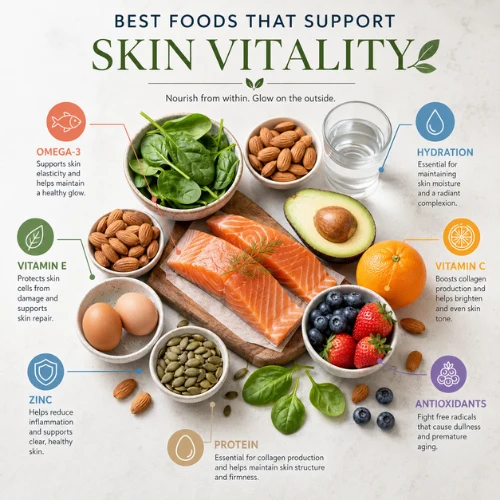
It is the overall pattern that matters most.
Still, there are certain foods that consistently support skin quality well. These are some of the best foods for skin vitality when included regularly in a balanced diet:
Fatty fish for omega-3 support
Eggs for protein, biotin, and fat-soluble nutrients
Berries for antioxidants
Avocados for healthy fats
Nuts and seeds for zinc, vitamin E, and essential fats
Leafy greens for folate and antioxidants
Citrus fruits and guava for vitamin C
Sweet potatoes for beta-carotene
Yoghurt or fermented foods for gut support
Tomatoes for lycopene and antioxidant support
Lentils and beans for plant protein and minerals
The real goal is not perfection.
It is consistent.
Does Sugar and Processed Food Affect the Skin?
Yes, often more than people realise.
Highly processed diets that are heavy in sugar, refined carbs, and poor-quality fats may contribute to:
Glycation damage to collagen
Increased inflammation
More breakouts in some individuals
Dullness
Faster visible ageing
Barrier stress
More reactive skin
This does not mean you can never enjoy treats.
But when processed foods become the foundation of the diet rather than the exception, the skin often starts to reflect it.
What About Supplements for Skin Health?
Supplements can be helpful, but they should support a good diet, not replace one.
Some patients may benefit from nutritional supplements skin health support when there is:
Documented deficiency
Poor dietary intake
Increased oxidative stress
Recovery after aesthetic procedures
High stress or lifestyle-related depletion
Specific hair-skin-nail concerns
Age-related nutrient gaps
Commonly considered supplements may include:
Omega-3 fatty acids
Vitamin C
Zinc
Vitamin D (if low)
Collagen peptides
Antioxidant blends
Probiotics in selected cases
However, not everyone needs the same supplement plan. Over-supplementing or self-prescribing without guidance can be unnecessary or sometimes counterproductive.
The best approach is targeted, not trendy.
Gut Health and Skin: The Connection Patients Often Miss
Your gut and skin are more connected than many people realise.

Poor gut health may sometimes show up as:
Inflammation
Bloating with skin flare-ups
Acne-prone skin
Sensitivity
Rosacea-like irritation
Dullness
Poor nutrient absorption
A gut-friendly eating pattern that includes:
Fibre
Fermented foods
Hydration
Reduced ultra-processed foods
Adequate protein
Micronutrient diversity
…can often support better skin resilience over time.
Healthy skin is not only about what you apply.
It is also about what your body can absorb and use properly.
Nutrition Supports Treatments Too
If you are investing in aesthetic treatments, nutrition becomes even more important.
Whether it is:
Skin boosters
Collagen stimulators
Microneedling
Laser treatments
RF-based procedures
Barrier repair treatments
Acne recovery protocols
…your skin heals and responds better when it has the nutrients it needs.
Patients who eat well often support:
Better post-treatment recovery
Less inflammation
Better collagen response
Improved healing quality
Stronger long-term results
This is where internal and external skin care should work together, not separately.
Final Thoughts
Healthy, glowing skin starts from within. While topical skincare helps, true long-term radiance comes from proper nutrition, hydration, and daily habits that support collagen production, healing, and skin resilience.
If your goal is not just a temporary glow but stronger, healthier skin that ages beautifully, nutrition should be part of your plan. Dr Mayur Bhobe offers personalised skin health guidance that goes beyond surface-level skincare.
To explore expert-led skin health and aesthetic treatments in Dubai, book a consultation today @+971 507 256 753.

