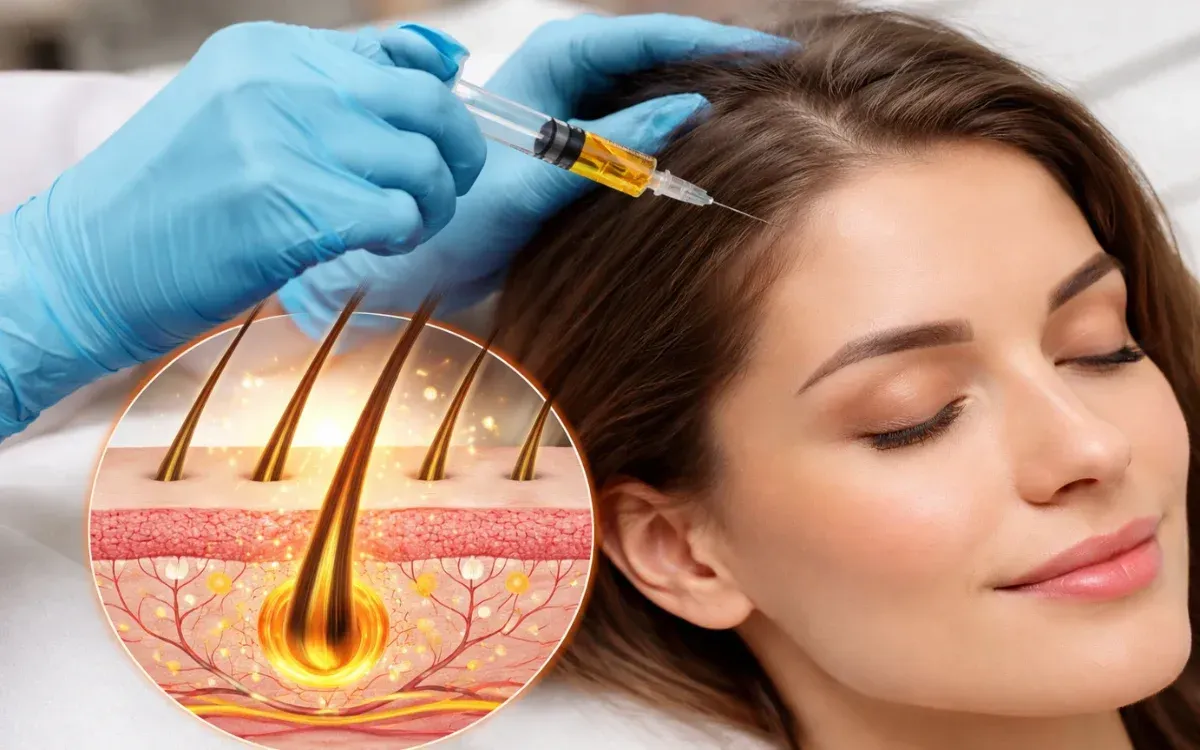
How PRF Injections Promote Natural Hair Follicle Revival Fast
Hair loss often feels subtle in the beginning, until one day it suddenly does not. You may notice more strands while washing your hair, a parting that looks wider than usual, or scalp visibility in photos and bright light that was not there before. These small changes can feel frustrating, especially when hair no longer looks as full, healthy, or dense as it once did. And in many cases, that early stage is exactly when regenerative treatment can make the biggest difference.
PRF injections are gaining attention because they do not simply cover up hair thinning; they work by supporting the scalp’s natural repair process. Using your body’s own concentrated healing factors, PRF helps nourish weakened follicles, improve the scalp environment, and encourage healthier, stronger hair growth over time.
What Is PRF and Why Is It Used for Hair Loss?
PRF stands for Platelet-Rich Fibrin. It is an advanced regenerative treatment made from a small sample of your own blood. The blood is processed in a way that concentrates platelets, fibrin, white blood cells, and growth factors into a powerful injectable solution that can be placed directly into the scalp.
Why does this matter?
Hair follicles need a healthy environment to function well. When the scalp circulation is reduced, inflammation increases, or follicles begin to weaken over time, hair growth can become thinner, slower, and less consistent. PRF is used to support the scalp by delivering natural growth signals exactly where the follicles need help.
This is why many patients consider PRF injections for hair growth when they want a treatment that is more biologically supportive and less dependent on synthetic ingredients.
How PRF Works Inside the Scalp
To understand why PRF is so effective, it helps to think of it as a “biological support treatment” rather than a cosmetic procedure.
Hair growth happens in cycles:
Anagen phase – active growth
Catagen phase – transition
Telogen phase – resting and shedding
When follicles are stressed, miniaturising, or underperforming, more hairs can shift into the shedding phase, and fewer remain in strong active growth. Over time, the strands become finer, shorter, and less dense.
PRF helps by supporting the follicle environment in several ways:
1. It Delivers Concentrated Growth Factors
Platelets contain proteins and signalling molecules that support healing and tissue repair. When PRF is injected into the scalp, these growth factors are released gradually and can help stimulate weaker follicles.
2. It Supports Blood Supply
Healthy follicles depend on good microcirculation. PRF may help improve the local environment around follicles, which can support nutrient delivery and healthier follicle activity.
3. It Helps Reduce the “Stressed Scalp” Effect
In many forms of hair thinning, follicles are not dead; they are simply underperforming. PRF helps create a more supportive regenerative environment, which can encourage follicles to function better again.
4. It Provides a Slow-Release Benefit
Unlike some preparations that release growth factors quickly, PRF has a fibrin matrix that allows for a more gradual release. This can provide longer biological activity within the scalp.
That is why many patients are drawn to the idea of natural hair follicle revival PRF, because the treatment is focused on helping your own follicles perform better instead of forcing an artificial change.
PRF vs PRP: What Is the Difference?
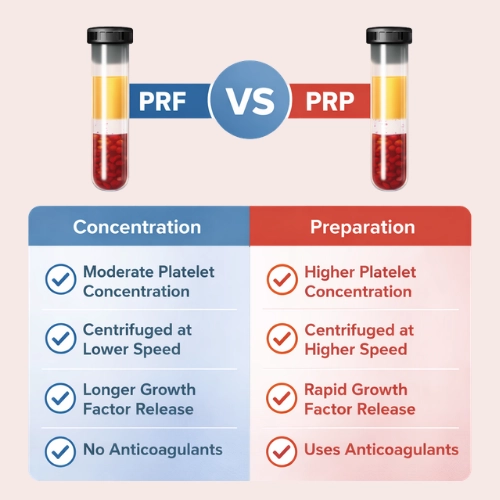
Many patients have heard of PRP, but PRF is often considered a more advanced regenerative option in selected cases.
PRP (Platelet-Rich Plasma)
Uses platelets concentrated from blood
Often processed with anticoagulants
Growth factors may release more quickly
PRF (Platelet-Rich Fibrin)
Also derived from your own blood
Usually prepared without anticoagulants
Contains platelets, fibrin, white blood cells, and growth factors
Designed for slower, more sustained release
This is one reason platelet-rich fibrin hair restoration is gaining attention in regenerative hair medicine. The fibrin matrix acts almost like a scaffold, helping the beneficial factors remain active for longer rather than being released all at once.
In simple terms, PRF is often seen as a more biologically active, longer-acting version of autologous scalp regeneration.
Who Is a Good Candidate for PRF Hair Treatment?
PRF tends to work best when follicles are still present but weakened.
That means the treatment is often most effective in early to moderate hair thinning, not in areas where follicles have been inactive for a very long time.
You may be a good candidate if you notice:
Increased hair shedding
Thinning at the crown
A widening part line
Reduced hair density
Finer hair strands than before
Early recession in certain areas
Hair loss after stress, illness, or hormonal shifts
Postpartum thinning
Diffuse thinning rather than complete bald patches
PRF may be especially useful for:
Men with early androgenetic hair thinning
Women with diffuse thinning or part-line widening
Patients who want a natural treatment using their own blood-derived factors
Patients looking to support hair after stress-related shedding
Patients who want to combine regenerative treatment with medical scalp care
When PRF may not be enough on its own
PRF is not a miracle fix for every type of hair loss. If there is severe long-standing baldness, scarring alopecia, or a medical condition driving hair loss, treatment needs to be personalised and may require further diagnosis, medication, or a combined approach.
That is why proper evaluation matters before treatment begins.
What Happens During a PRF Hair Session?
One of the reasons patients like PRF is that the process is relatively straightforward and uses your body’s own regenerative material.
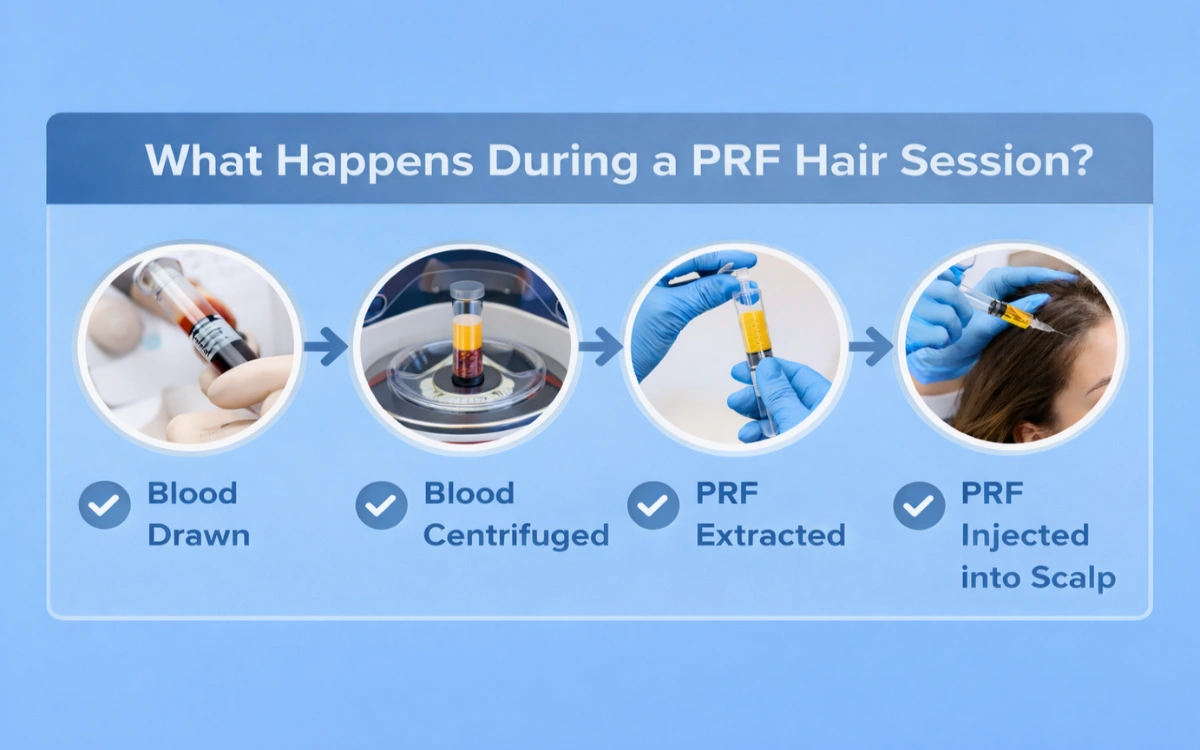
A typical session includes:
1. Consultation and Scalp Assessment
Before anything is injected, the scalp and hair loss pattern should be properly assessed. This is important because not all thinning is the same.
2. Blood Collection
A small amount of your blood is drawn, similar to a routine blood test.
3. Processing the PRF
The blood is spun in a centrifuge using a protocol designed to separate and concentrate the regenerative components.
4. Scalp Injections
The prepared PRF is injected into the areas of thinning across the scalp using multiple tiny injections.
Is it painful?
Most patients describe it as tolerable but slightly uncomfortable, especially in sensitive scalp areas. Numbing strategies or comfort measures may be used depending on the clinic’s protocol and the patient’s sensitivity.
How long does it take?
A session usually takes around 45–60 minutes, depending on the treatment area and preparation method.
How Many Sessions Are Usually Needed?
PRF is not usually a one-and-done treatment.
Because hair grows slowly and follicles need ongoing support, most patients benefit from a structured treatment plan.
A common approach may include:
Initial phase: 3–4 sessions spaced a few weeks apart
Maintenance phase: sessions every few months, depending on response
The exact schedule depends on:
Degree of thinning
Cause of hair loss
Scalp condition
Age
Hormonal factors
Whether PRF is being combined with other treatments
Consistency matters more than chasing a quick fix.
How Soon Can You See Results?
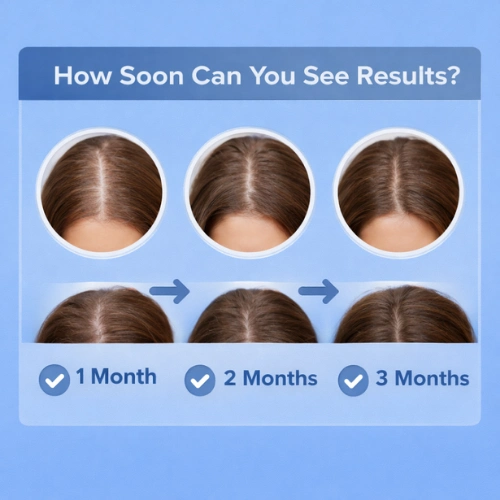
This is where expectations need to be realistic.
Hair biology moves slowly. Even when follicles respond well, visible changes take time because the hair shaft itself needs time to grow out.
Common timeline:
Early weeks: reduced shedding may be noticed first
2–3 months: some patients begin noticing baby hairs, improved texture, or less hair fall
3–6 months: density and quality improvements become more visible
Beyond 6 months: stronger cumulative results in responsive patients
This is why the phrase fast hair regrowth PRF injections should always be understood in a medical context. “Fast” in hair restoration does not mean instant. It means helping follicles recover and re-enter healthier growth cycles sooner than they might without intervention.
The best results tend to happen when treatment is started early, before follicle miniaturisation becomes advanced.
What Kind of Results Can PRF Actually Improve?
When PRF works well, the goal is not overnight dramatic hair growth. The goal is progressive improvement in follicle performance.
Patients may notice:
Less daily shedding
Improved hair texture
Better strand thickness
Increased density in thinning areas
Better scalp quality
Stronger-looking regrowth over time
Improved response when combined with a medical hair plan
In many cases, patients say their hair feels “healthier” before they see an obvious visual change. That is a good sign. Stronger follicles often show subtle quality changes before visible density becomes apparent.
Can PRF Be Combined with Other Hair Treatments?
Yes, and often it should be.
Hair loss is rarely caused by one factor alone. A patient may have:
Hormonal influences
Nutritional deficiencies
Stress-related shedding
Scalp inflammation
Genetic miniaturisation
Postpartum changes
Poor scalp barrier health
That is why PRF often works best as part of a broader hair restoration plan, which may include:
Medical scalp evaluation
Nutritional support when needed
Prescription or topical therapies when appropriate
Exosome or growth factor-based regenerative options in selected cases
Scalp care protocols
Lifestyle and stress-related support
PRF is a powerful regenerative tool, but the best outcomes come when the underlying cause is also addressed.
Why Early Treatment Makes Such a Big Difference
One of the biggest mistakes patients make is waiting too long.
Many people assume hair thinning will “settle on its own,” or they try oils, shampoos, and home remedies for months before seeking proper help. By the time they come in, the follicles may be far more miniaturised than they realise.
The earlier you intervene:
More follicles may still be active
The better the chance of improving density
The easier it is to preserve existing hair
The more natural the final result tends to look
Think of PRF as a treatment that supports recovery while there is still something meaningful to revive.
Summing Up
Hair loss doesn’t have to become severe before you take action. Early intervention with the right regenerative treatment can help restore stronger, healthier, and natural-looking hair.
If you’re noticing increased shedding, thinning, or a widening part, now is the ideal time to get it evaluated. Dr. Mayur Bhobe offers personalized PRF treatment in Dubai, tailored to your scalp condition, hair loss pattern, and long-term goals.
To find out if PRF is suitable for you, book a consultation today, contact @+971 507 256 753

