
Early Signs of Skin Abnormalities & When to Seek Expert Help
Sometimes, your skin gives small warnings long before a condition becomes obvious. A mole that starts changing shape, a patch of skin that does not heal, persistent redness, unusual itching, sudden pigmentation, or a bump that was not there before may seem easy to ignore at first. But when something on the skin keeps changing, lingers longer than expected, or simply does not look or feel normal, it deserves closer attention.
Not every skin change is serious, but some skin abnormalities should never be left to guesswork or home remedies. Early evaluation can make a real difference, whether it is a harmless concern, an inflammatory condition, or something that needs timely medical treatment. In this blog, we will walk through the early signs of skin abnormalities, what they may indicate, and when it is the right time to seek expert help instead of waiting for it to worsen.
Why It Is So Easy to Miss Early Skin Changes
Most people only pay close attention to their skin when:
A concern becomes visible in photos
It starts affecting confidence
It becomes painful or itchy
It spreads quickly
Home remedies stop working
The problem is that many skin conditions do not start that way.
They often begin with:
Mild colour changes
Slight texture differences
One new spot
A small patch that stays longer than expected
A mole that changes so gradually you barely notice it
Repeated irritation in the same area
This is why recognising skin abnormalities symptoms early can make a major difference. Whether the issue is harmless, inflammatory, pigment-related, infection-related, or something that needs closer medical evaluation, early attention usually makes diagnosis simpler and treatment more effective.
What Is Considered a Skin Abnormality?
A skin abnormality is any skin change that is:
New
Persistent
Unusual for your skin
Changing over time
Recurrent in the same area
Not healing as expected
This can include changes in:
Colour
Texture
Size
Shape
Sensation
Surface pattern
Healing behaviour
In simple terms, if something on your skin looks, feels, or behaves differently than it normally does, and it does not settle the way temporary skin changes usually do, it deserves attention.
Common Early Signs You Should Never Ignore
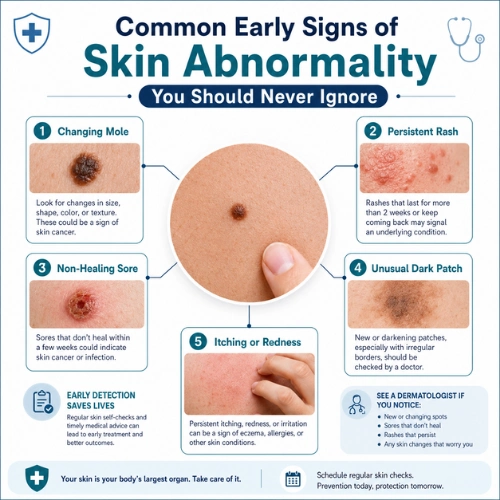
1. A Spot or Patch That Does Not Go Away
One of the most overlooked warning signs is a skin mark that stays longer than expected.
This could be:
A red patch
A dark mark
A pale patch
A rough area
A flaky or irritated zone
A spot that keeps returning in the same place
Temporary irritation should improve with time. If it does not, it should be checked.
A persistent patch can be related to:
Pigment disorders
Chronic inflammation
Eczema or dermatitis
Fungal infection
Post-inflammatory change
Sun damage
Pre-cancerous changes in rare cases
The longer it stays, the more important it becomes to assess properly.
2. A Mole That Looks Different Than Before
Many patients have moles, freckles, or pigmented spots that are completely harmless.
The concern is not always the mole itself.
The concern is change.
Watch for a mole that becomes:
Darker
Larger
More uneven in shape
More irregular at the border
Raised in a new way
Multicoloured
Itchy, crusty, or bleeding
Even if it turns out to be harmless, any evolving mole should be assessed. Patients often wait because the change feels “small,” but subtle change is exactly what matters most.
3. A Rough, Scaly, or Thickened Area That Keeps Returning
If you keep noticing a rough patch in the same area, especially on sun-exposed skin such as the:
Forehead
Nose
Cheeks
Ears
Scalp
Hands
…it should not be ignored.
These can sometimes be linked to:
Chronic sun damage
Barrier dysfunction
Recurrent dermatitis
Irritation from skincare
Thickened healing patterns
Pre-cancerous lesions in some cases
A patch that repeatedly comes back is your skin telling you something is not fully resolved.
4. Sudden Darkening or Uneven Pigmentation
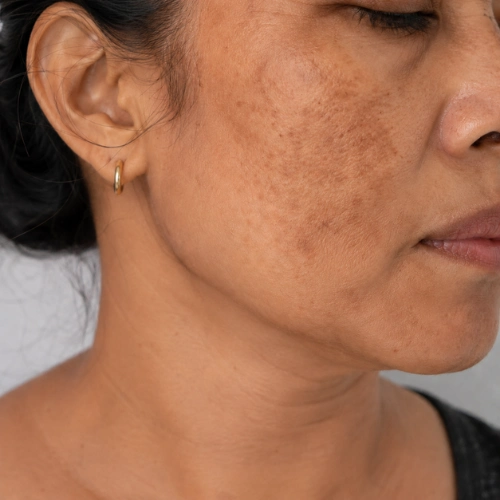
Pigmentation is common, but sudden or unexplained changes still deserve attention.
Watch for:
A dark patch that appears without clear cause
Uneven facial pigmentation that keeps worsening
Pigmentation after irritation that does not fade
Localised dark spots that seem to deepen over time
New pigment changes after procedures or skincare products
Not every dark mark is “just tanning” or “just acne marks.”
Some are due to:
Hormonal triggers
Inflammation
Barrier damage
Sun exposure
Friction
Medication reactions
Underlying inflammatory skin conditions
Without proper diagnosis, patients often worsen the problem with random acids, harsh peels, or incorrect creams.
5. A Spot That Bleeds, Crusts, or Does Not Heal Properly
This is one of the most important warning signs.
If a skin lesion:
Bleeds without obvious injury
Forms a crust repeatedly
Looks like a pimple that never fully settles
Opens and heals, then returns
Feels sore or tender for no clear reason
It should be examined by a dermatologist.
This does not automatically mean something dangerous, but it does mean it should not be ignored or repeatedly self-treated.
6. Persistent Itching, Burning, or Sensitivity in One Area
Sometimes abnormal skin does not look dramatic, but it feels different.
Watch for areas that:
Keep itching
Burn after mild skincare
Sting repeatedly
Feel irritated without visible reason
Become sensitive in the same exact spot
This may suggest:
Barrier damage
Early dermatitis
Allergic or irritant reactions
Inflammatory conditions
Fungal or yeast involvement
Rosacea-like changes
Chronic low-grade irritation
Symptoms matter even when the visible change seems minor.
7. Recurrent Acne-Like Bumps That Do Not Behave Like Acne
Not every bump is acne.
If you keep getting bumps that:
Appear in unusual areas
Do not respond to acne products
Stay for too long
Are itchy instead of tender
Leave unusual marks
Come back in the same place
…the diagnosis may be something else entirely, such as:
Folliculitis
Rosacea
Perioral dermatitis
Barrier-related inflammation
Contact dermatitis
Fungal-related eruptions
Self-treating the wrong condition often delays improvement and can worsen the skin barrier.
Why Self-Diagnosing Skin Changes Often Backfires
This is where many patients lose time.
They rely on:
Social media advice
Random product recommendations
Pharmacy creams without diagnosis
DIY home remedies
Overuse of exfoliants
Steroid-based creams from non-medical sources
Internet photos that “look similar”
The problem is that many skin conditions can look alike in the beginning.
For example:
Pigmentation can look like melasma, post-inflammatory change, or irritation
A red rash can be eczema, fungal infection, rosacea, or contact dermatitis
A persistent bump can be acne, folliculitis, or something else
A rough patch can be dryness, sun damage, or a lesion needing review
That is why diagnosis always matters more than guessing.
When Should You Stop Watching and Start Booking?
This is the question many patients ask too late.
If you are wondering when to see dermatologist skin changes, here is a simple rule:
If a skin change is persistent, evolving, unexplained, recurrent, or not improving with simple care, it is time to get it checked.
You should book a professional assessment if:
A mole changes in size, shape, or colour
A patch stays longer than a few weeks
A lesion bleeds, crusts, or does not heal
A dark mark keeps worsening
A rash repeatedly returns
A spot feels different than the rest of your skin
Your skin reacts badly to multiple products
A concern is spreading
Home remedies are making it worse
You simply feel something is “not right”
That last point matters.
If your skin feels unusual to you, that is reason enough to ask.
What Dermatologists Look for During a Skin Evaluation
A proper skin consultation is not just about looking at the surface.
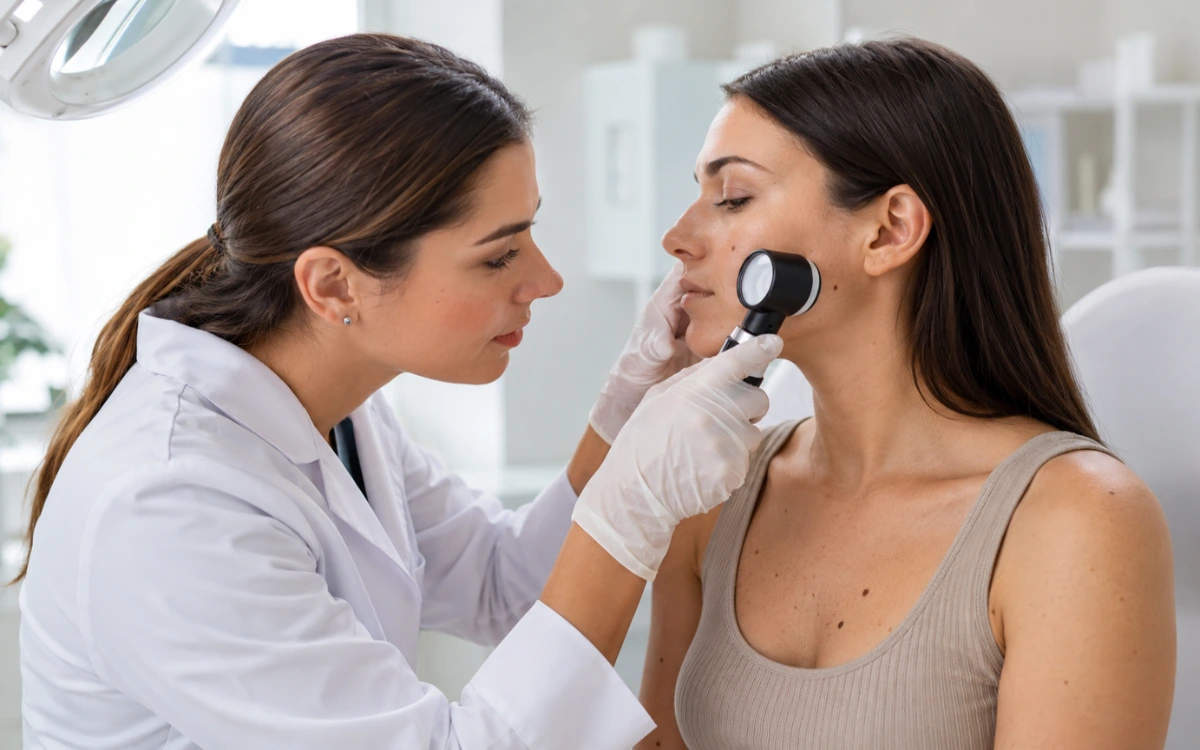
A dermatologist evaluates:
Onset of the issue
Rate of change
Distribution and pattern
Colour characteristics
Texture
Border definition
Symptoms like itch, pain, burning, or bleeding
Triggers such as sun, hormones, friction, or products
Past treatment history
Skin type and sensitivity
Family or personal history of skin disease
This is how the doctor decides whether the issue is:
Benign and cosmetic
Inflammatory
Pigment-related
Infection-related
Allergy-related
Barrier-related
Worth monitoring
In need of biopsy or further evaluation in rare suspicious cases
This is why warning signs skin issues should never be dismissed just because they are not dramatic.
Why Early Detection Makes Treatment Easier
The earlier a skin concern is diagnosed, the more likely it is that:
The cause is easier to identify
The treatment is simpler
The risk of scarring is lower
Pigmentation is easier to control
The condition responds faster
The need for aggressive treatment is reduced
Serious causes can be ruled out sooner
This is especially true in cases of abnormal skin spots early detection, because small, subtle lesions are often easier to assess and manage before they evolve into something more complex.
In dermatology, waiting rarely makes things simpler.
Final Thoughts
Most skin concerns don’t appear suddenly. They often begin with small, subtle changes, a patch that lingers, a mole that changes, a recurring spot, or a shift in skin texture. These early signs may seem minor, but they deserve attention.
The goal is not to panic, but to stop ignoring changes that are persistent, unusual, or evolving. When assessed early, most skin issues can be treated more effectively with simpler solutions.
If you’ve noticed anything new, stubborn, or different on your skin, it’s time to get it checked. Book a consultation with Dr. Mayur Bhobe in Dubai at +971 507 256 753.

